
Progressive overload app
Load logging and volume analysis in one place, so the decision to add weight comes from the numbers rather than from how you woke up.


Log the load precisely
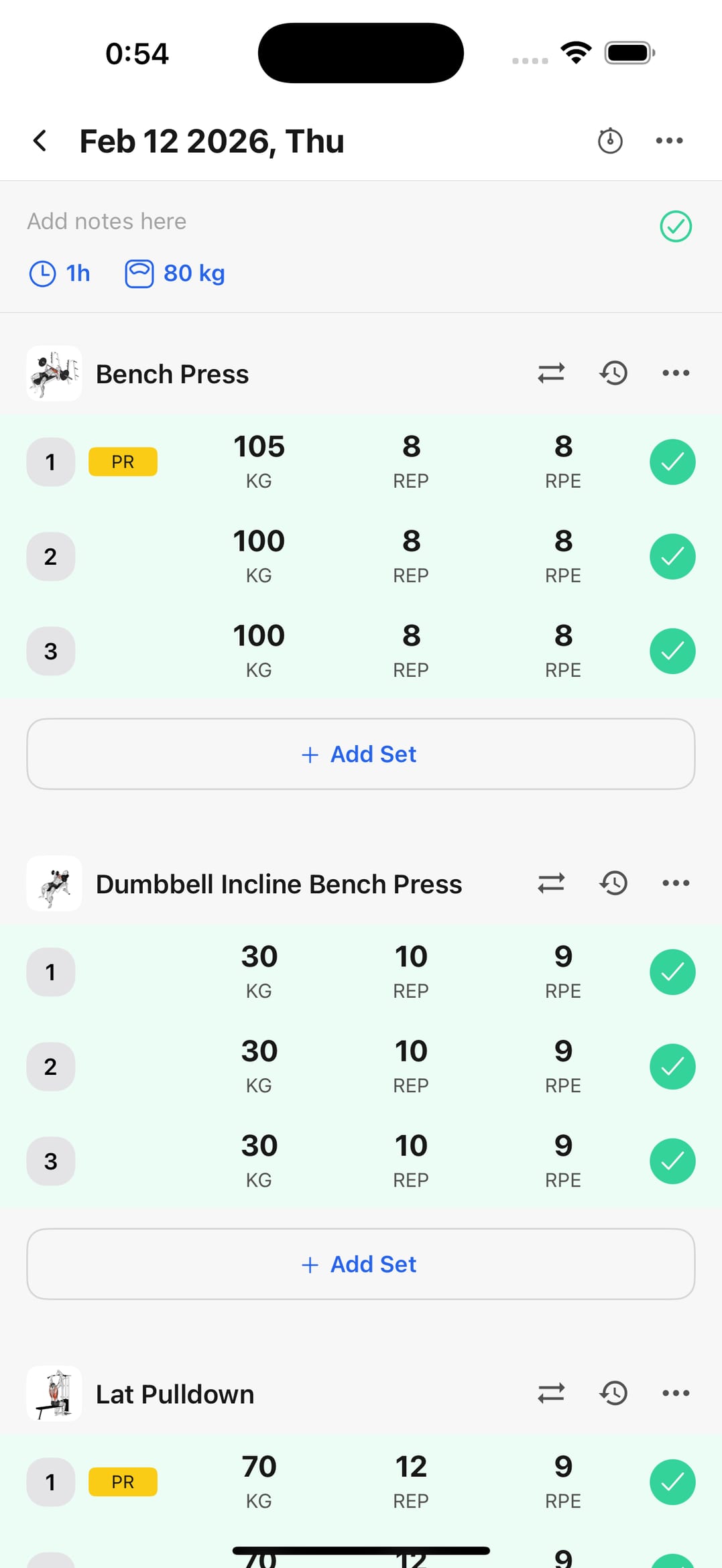
Exercises, sets, and weights recorded during the session. In strength work, the difference between progressing and not is increments memory can't hold.
Organize exercises and variations
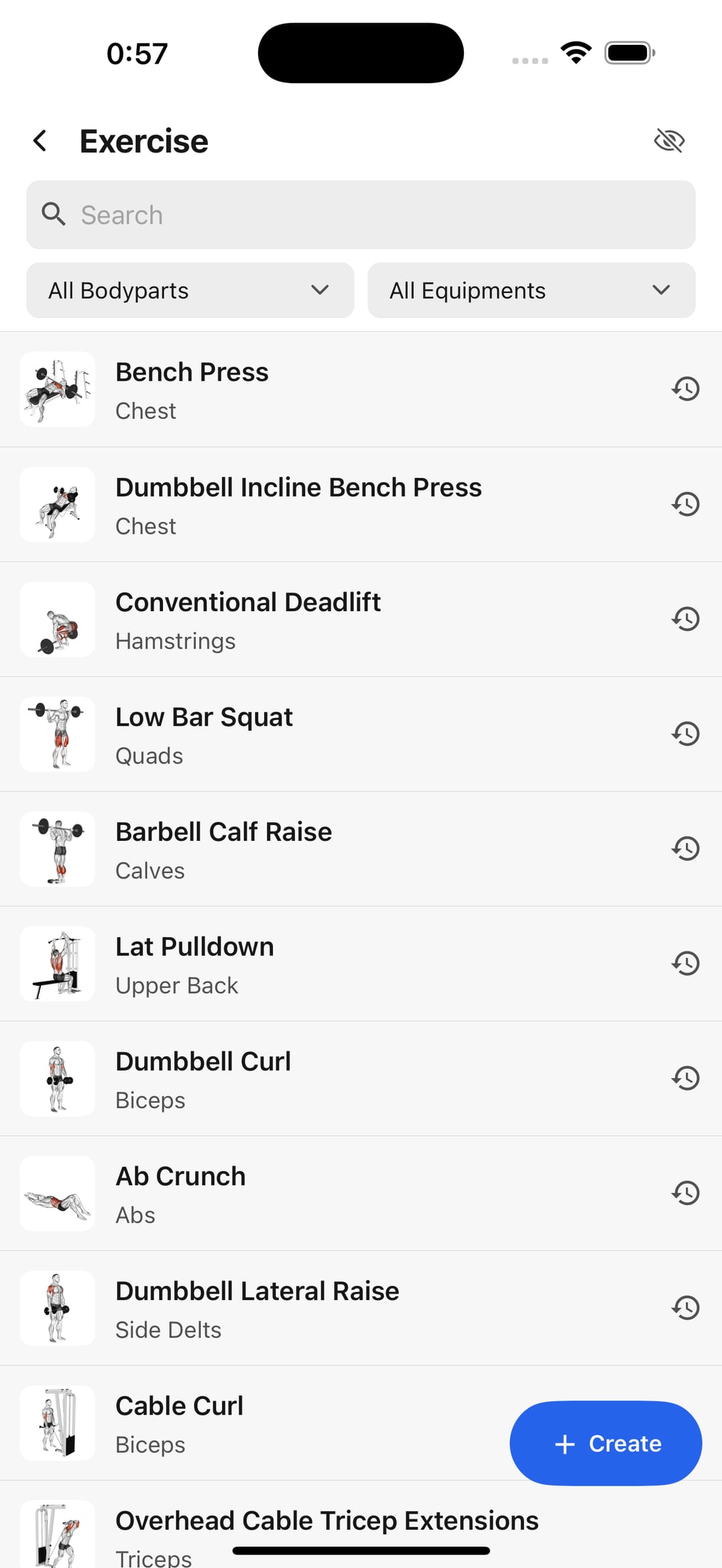
Use the built-in movements or create your own — front squat, close-grip bench, whatever you train. Each one carries its own progression.
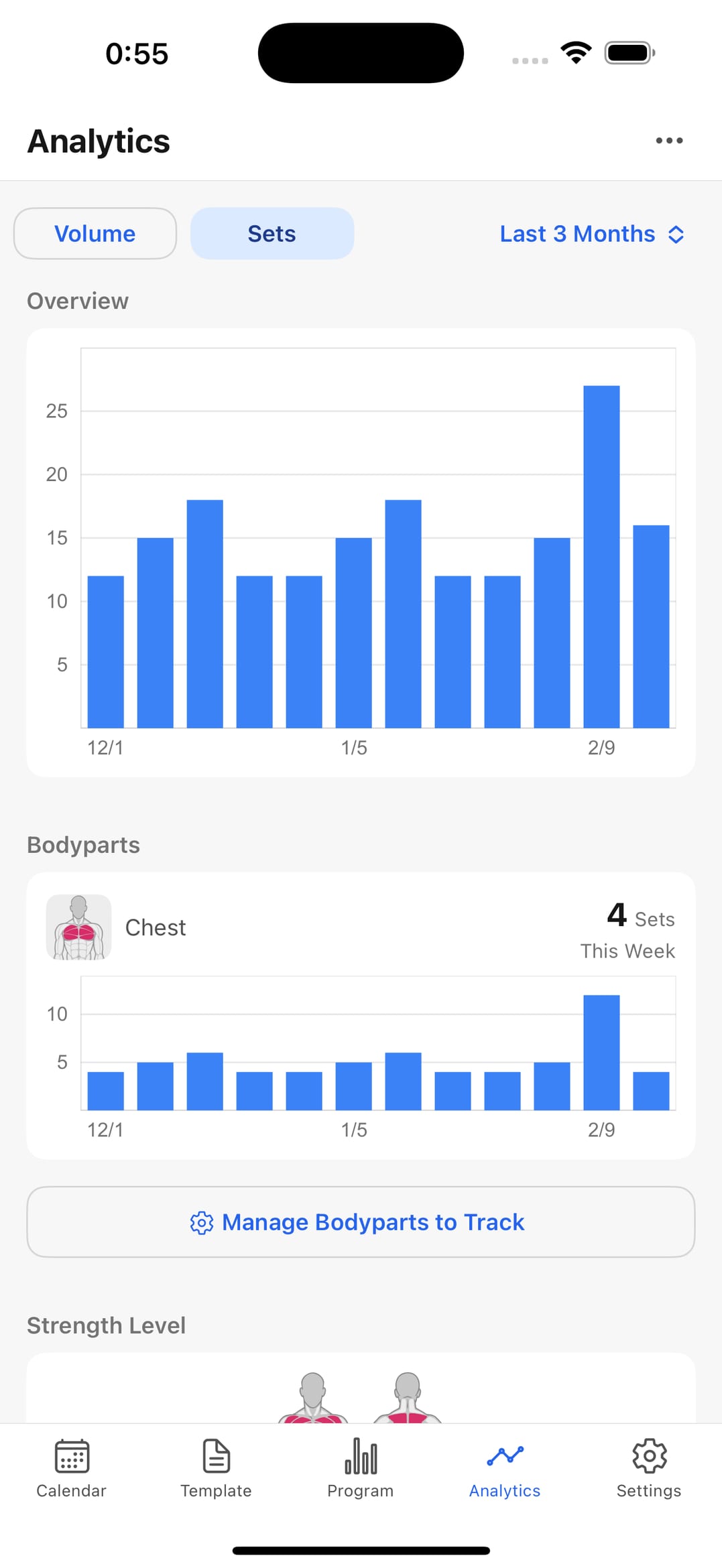
Volume calculates itself when you finish
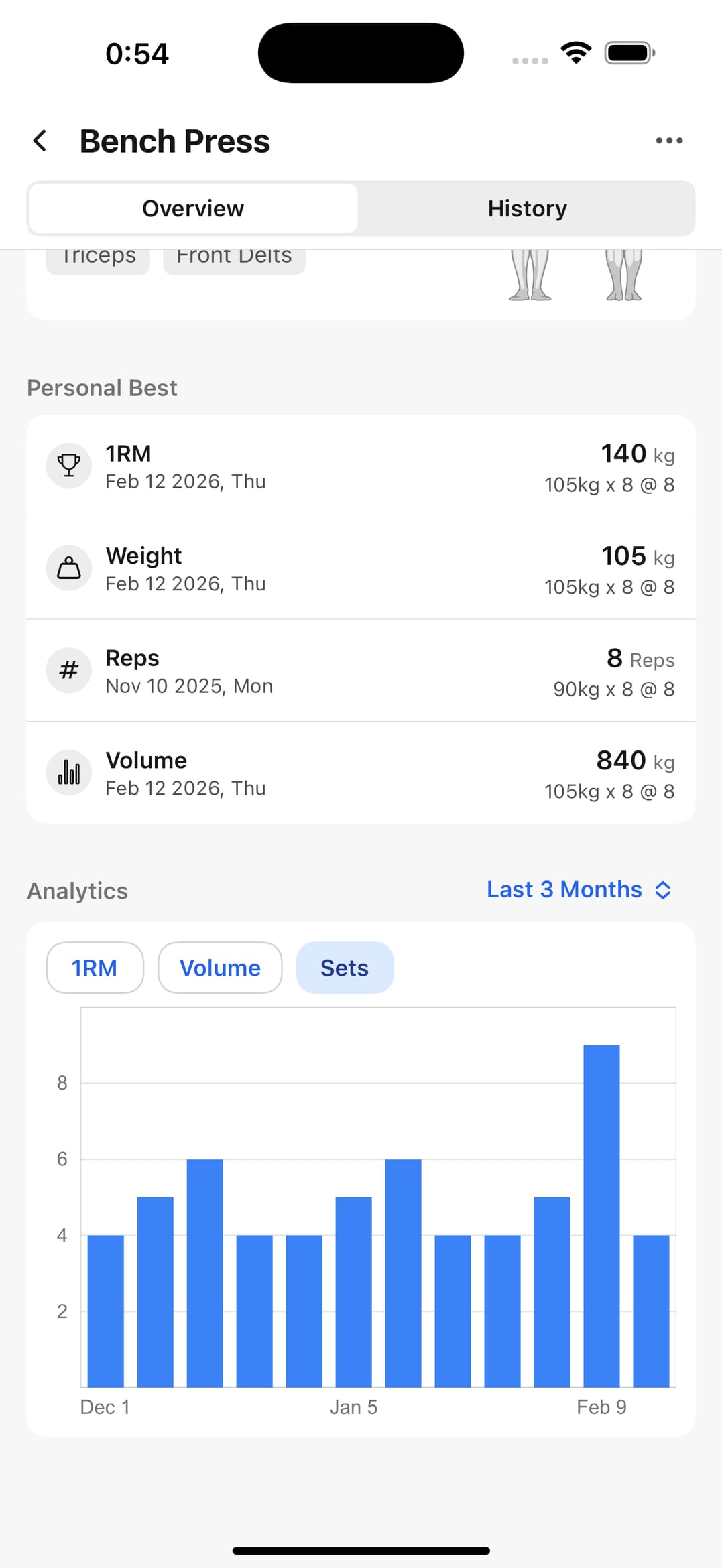
Sets, reps, tonnage, and estimated 1RM updated after every session. No spreadsheet to rebuild each week.
For training with data behind it
Beyond volume: planning, history, and reusable routines.
Build programs
Structure blocks and adjust them against real progress.
Calendar review
Frequency and load distribution across the weeks.
Exercise library
Standard and custom movements in the same place.
Reusable templates
Repeat your usual sessions without rebuilding them.
Shareable summaries
Share volume and session results as text or an image.
Frequently asked questions
What is training volume?
The total work done, usually calculated as weight × reps × sets. It's the simplest number for comparing one week against another.
Why does tracking volume matter for progressive overload?
Because overload needs an objective reference. Without measured volume it's easy to believe you're adding load when you're really just doing fewer sets of it.
Can I see volume per exercise?
Yes. Sets, reps, and volume are reviewable per exercise and per muscle group, which is where you spot the lift that's fallen behind.
How often should I review these numbers?
Once a week. Checking daily makes you react to the noise of one bad session instead of the trend, and the trend is what matters.
Drive your progression with data
Log your loads and adjust from real numbers. Free to start, on iPhone and Android.