
Workout log app
The numbers say what you lifted. The notes say why that week was bad. Together they explain your progress far better than either does alone.


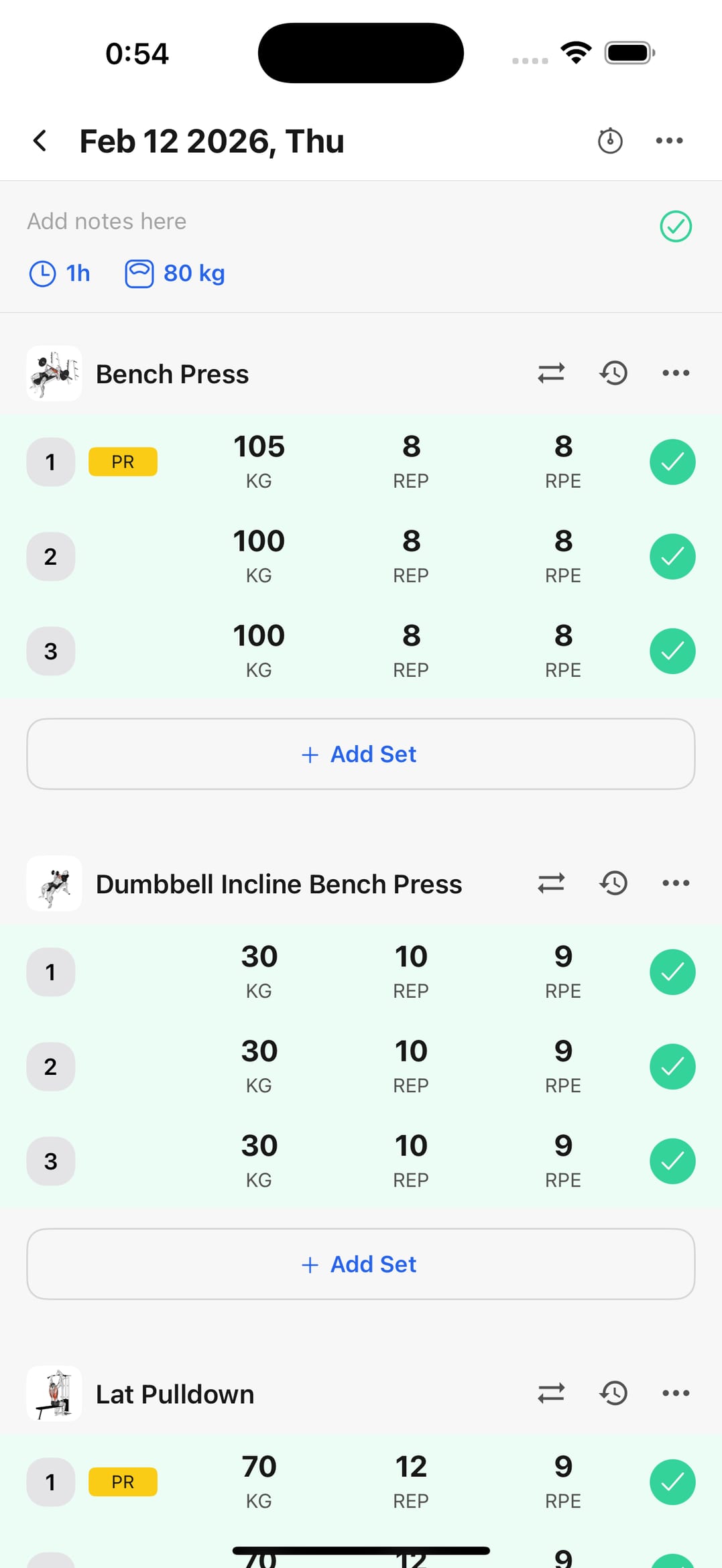
Record what doesn't fit in a number
That you slept four hours, that the shoulder was complaining, that you changed grip. A month from now, that's what explains the dip.
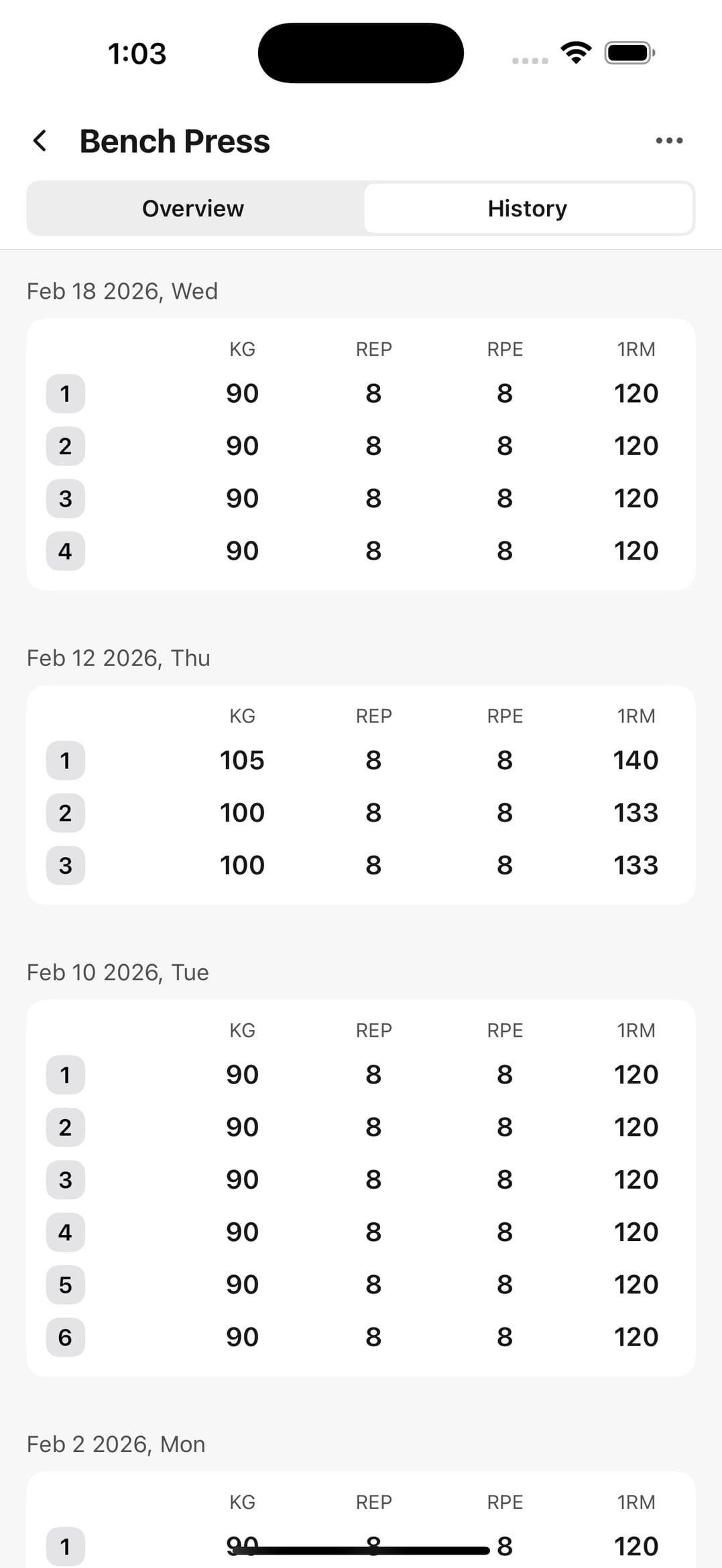
Read your history exercise by exercise
Pull up your previous numbers on that lift right when you're deciding what to attempt today, instead of relying on what you half-remember.
Repeat sessions with the context attached
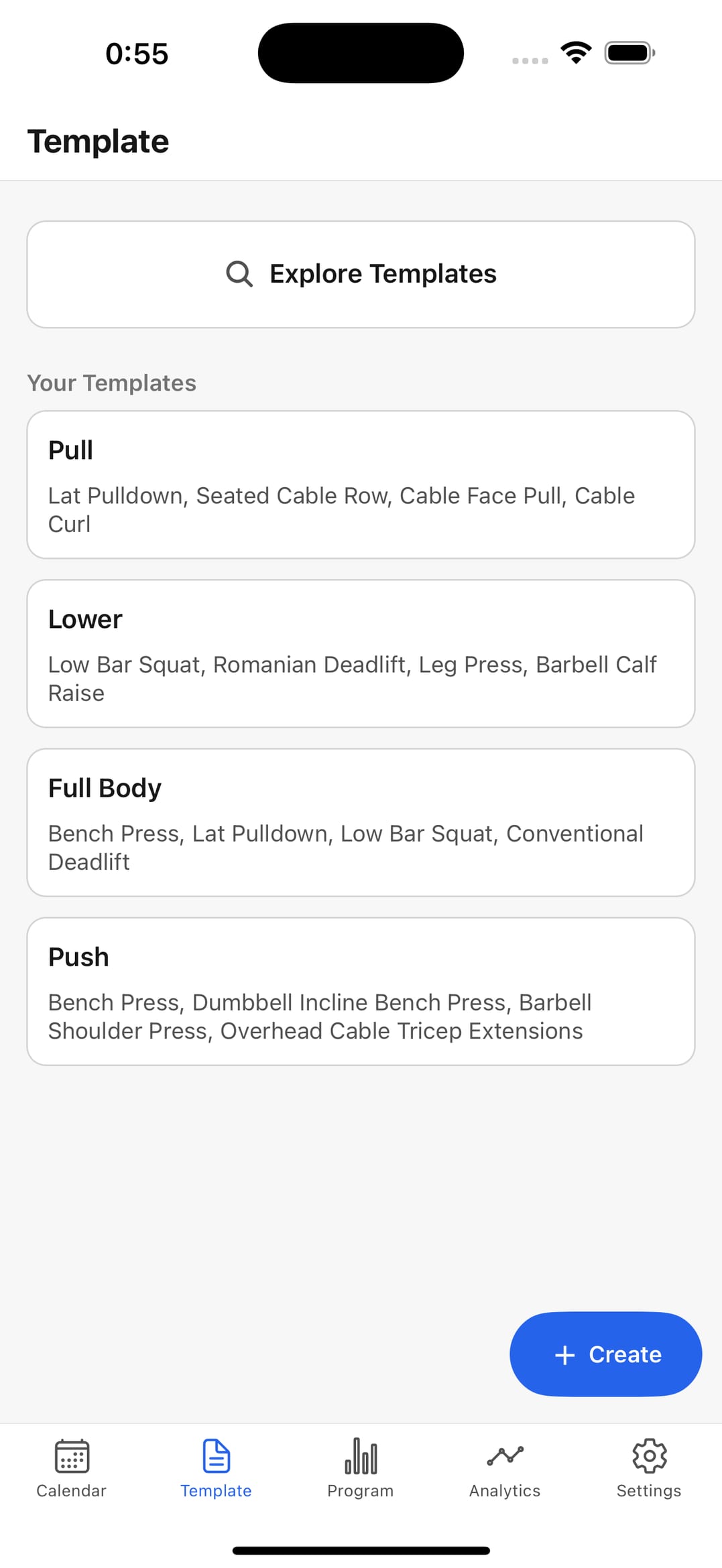
Save the routine as a template and keep the observations with it, so what you learned last block carries into the next one.
Log and tracking in the same place
The context of every workout, without depending on scattered notes.
Session logging
Notes tied to their exercises, sets, and results.
Contextual analytics
Read your progress alongside what you wrote down.
Organized history
Earlier entries reachable by date.
Templates with notes
Repeat routines while keeping what you learned.
Shareable summaries
Send a session to a coach when you want a second opinion.
Frequently asked questions
What's a workout journal actually for?
Remembering what you did, why you changed it, and how performance responded. It's what stops you repeating an experiment that already failed four months ago.
Is it useful if I already log sets and weight?
Yes, it's the complement. The numbers show performance dropped; the note from that day tells you whether it was sleep, pain, or a changed exercise.
Better to write during or after the session?
Sets and weights during, while you remember them exactly. Observations at the end, when you have perspective on how the whole session went.
How does this help me avoid stalling?
It lets you compare the decision you made against the result it produced. Without that record, people keep repeating adjustments that already didn't work.
Start your log with today's session
Download on iPhone or Android and keep the notes with the numbers. Free to start.