
Weekly workout plan
A well-split week is the difference between progressing and accumulating fatigue. Here's how to distribute the days and what to do when one falls through.


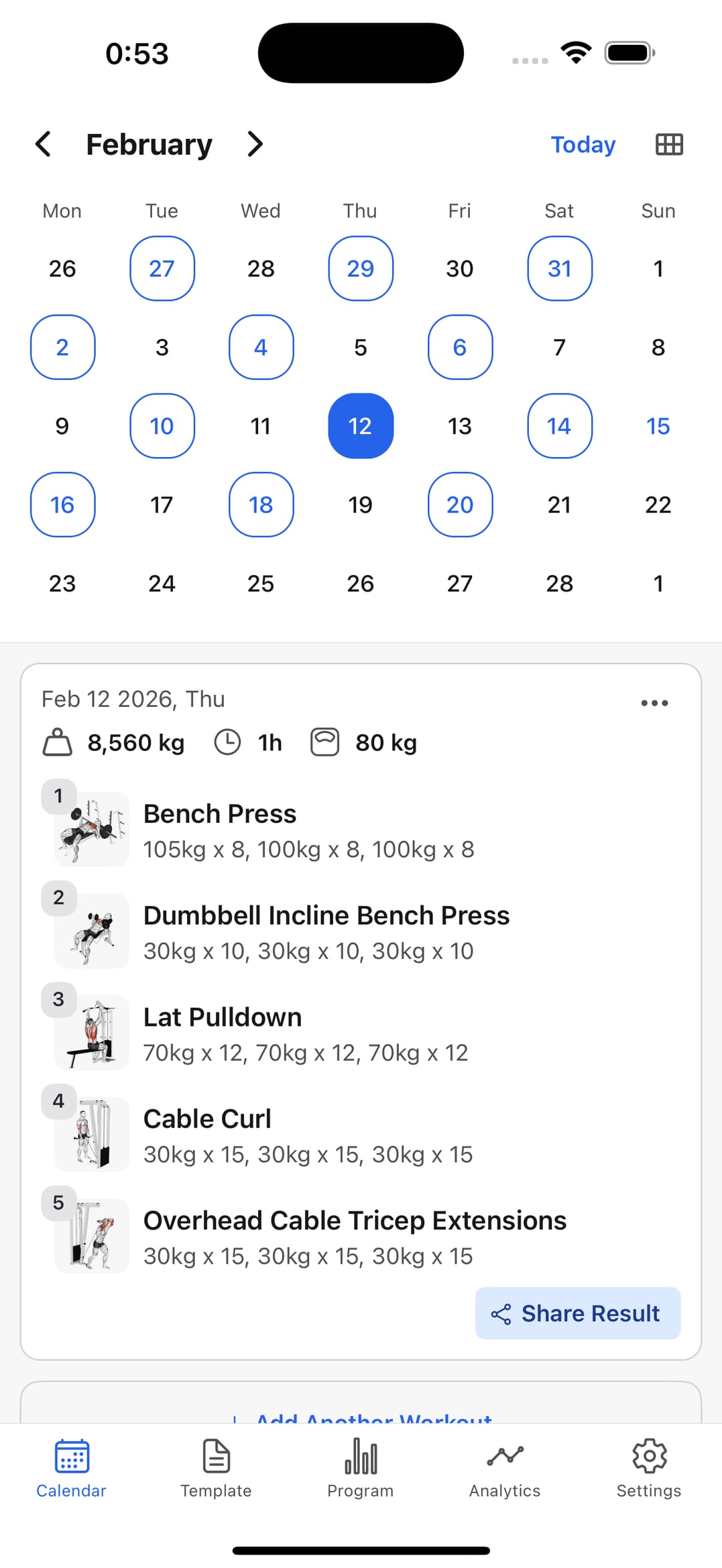
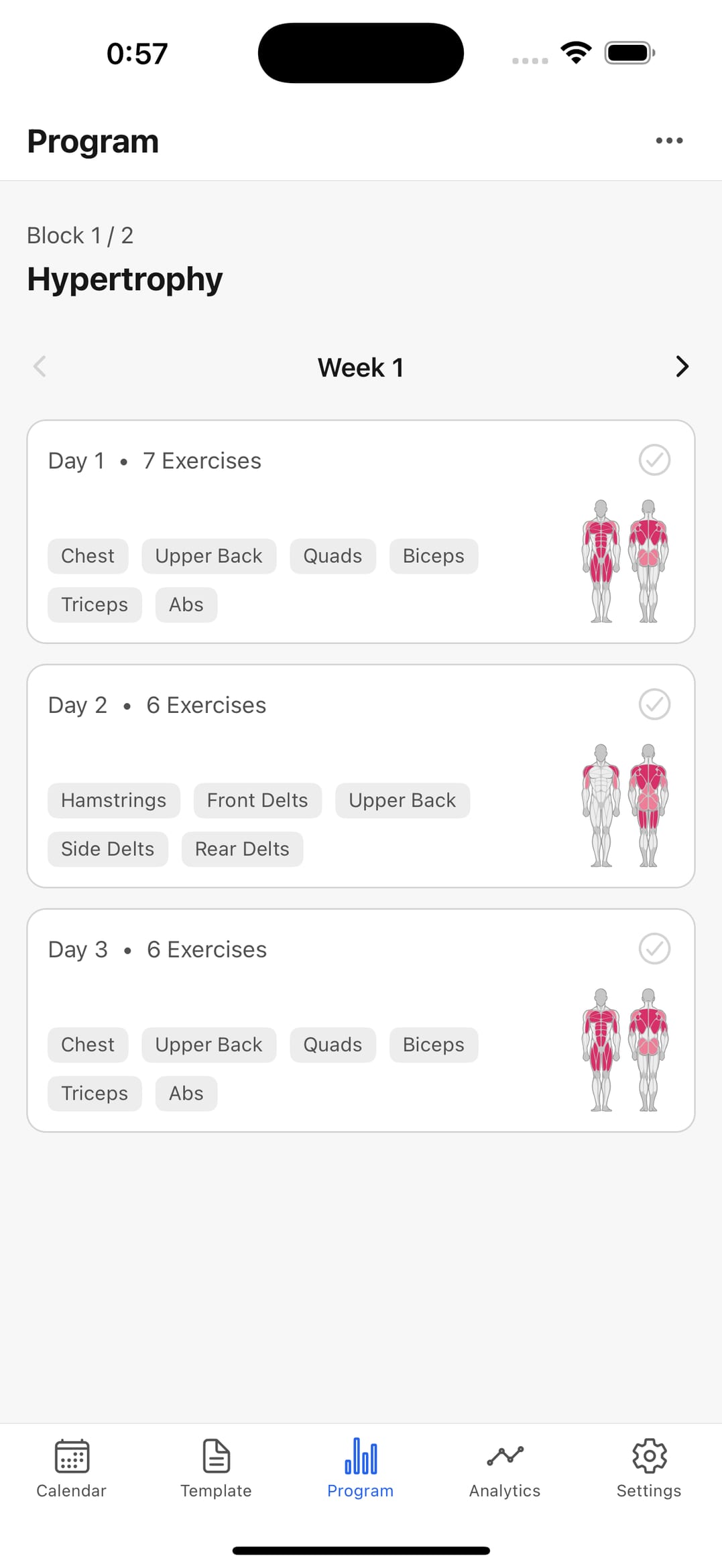
Decide which days go hard and which don't
Not every session can be brutal. Alternating demanding days with moderate ones is what lets you sustain the volume month after month.
Have the sessions ready in advance
Improvising at the gym usually ends at the same machine as always. With templates built, each day already knows what it's doing.
On Sunday, compare planned against done
That's where the useful information is: if you always miss the same weekday, the problem is the split, not your willpower.
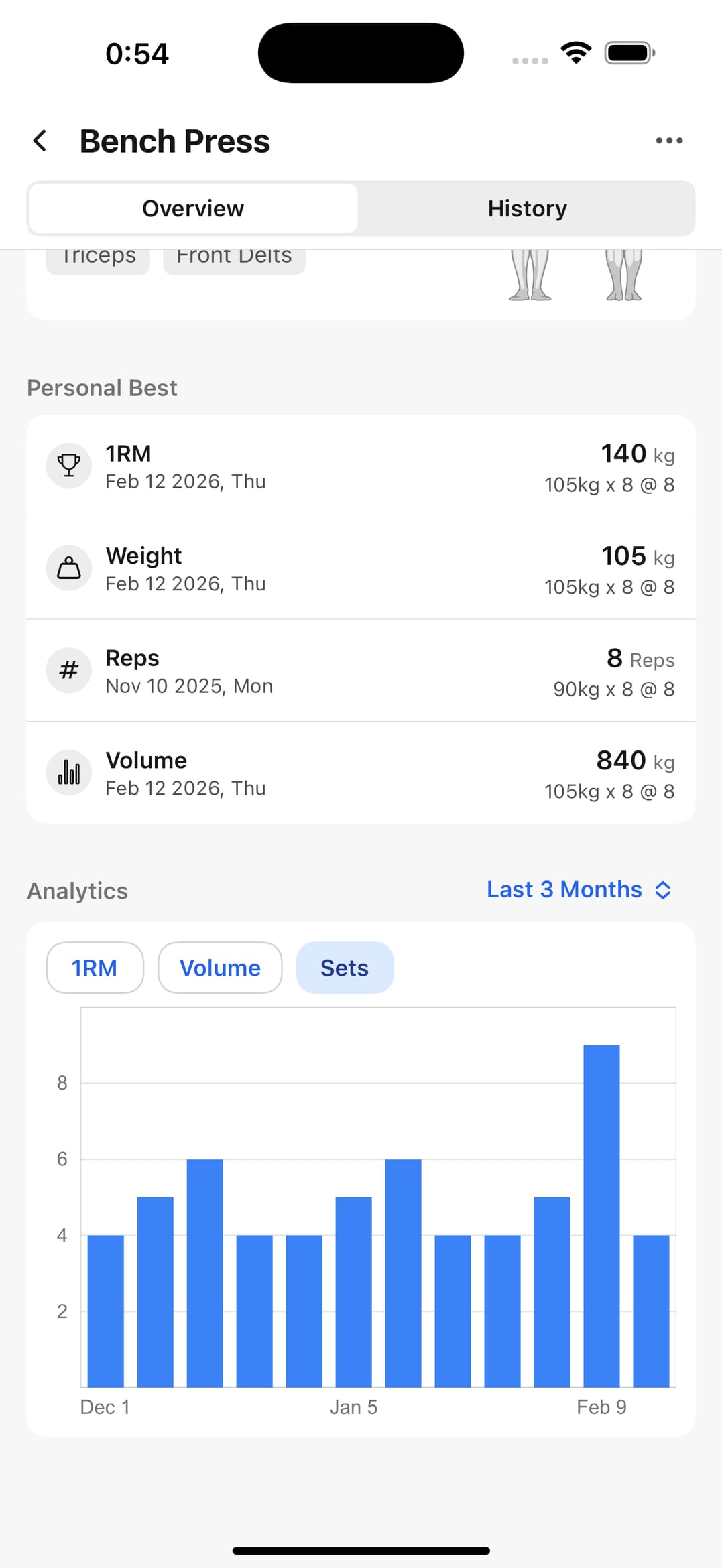
Weekly control for progressing without swings
A clear structure helps you train better and, above all, recover better.
Editable plan
Adjust the week around your real energy and availability.
Templates by day
Each day with its session type and its purpose.
Load calendar
Effort distributed across the whole week.
Progress review
Check whether weekly volume is genuinely climbing.
Daily logging
Results recorded so you fix imbalances early.
Frequently asked questions
How do I split a weekly workout plan?
Start from the frequency you'll genuinely hit and separate sessions that share a muscle group. With three days, one rest day in between is enough.
What if I miss a session?
Don't make it up by stacking two days together. Keep the main lifts of the next session and cut the accessories — the cycle stays intact.
How long should I keep the same weekly structure?
Four to six weeks minimum. Before that you don't have enough data to know whether the split works or you simply had a bad week.
Does the same structure work for strength and hypertrophy?
Yes. The rep range and volume change, but the logic of distributing hard, moderate, and rest days is the same for both.
Organize your week and actually run it
Build the plan, log every session, and review on Sunday. Free to start.