Home workout plan
The best plan is the one you finish. Here's how to split the week around the equipment you own, and what to do when it starts feeling light.


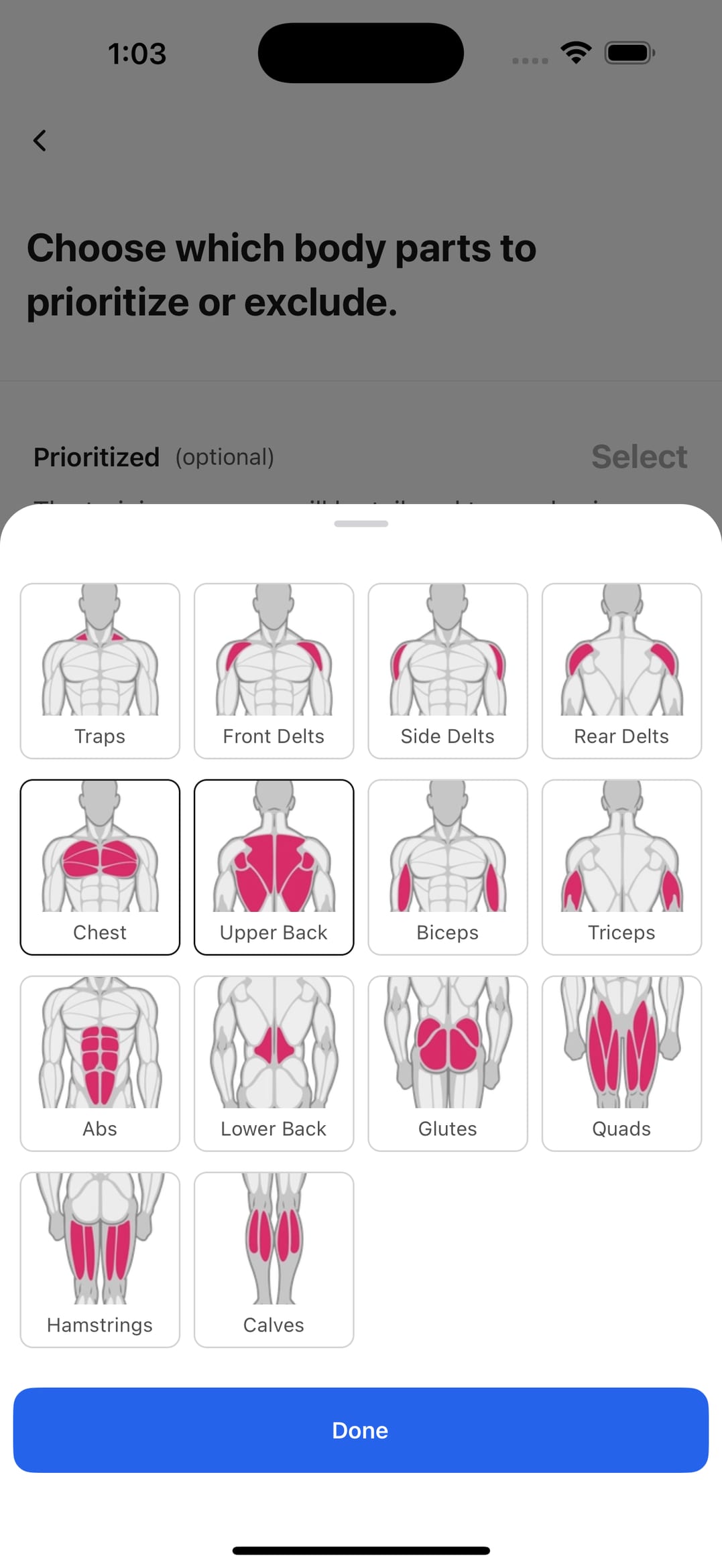
Keep one alternative ready per movement
Bodyweight, dumbbell, or band for the same pattern. That way a missing piece of equipment doesn't turn into a missed session.
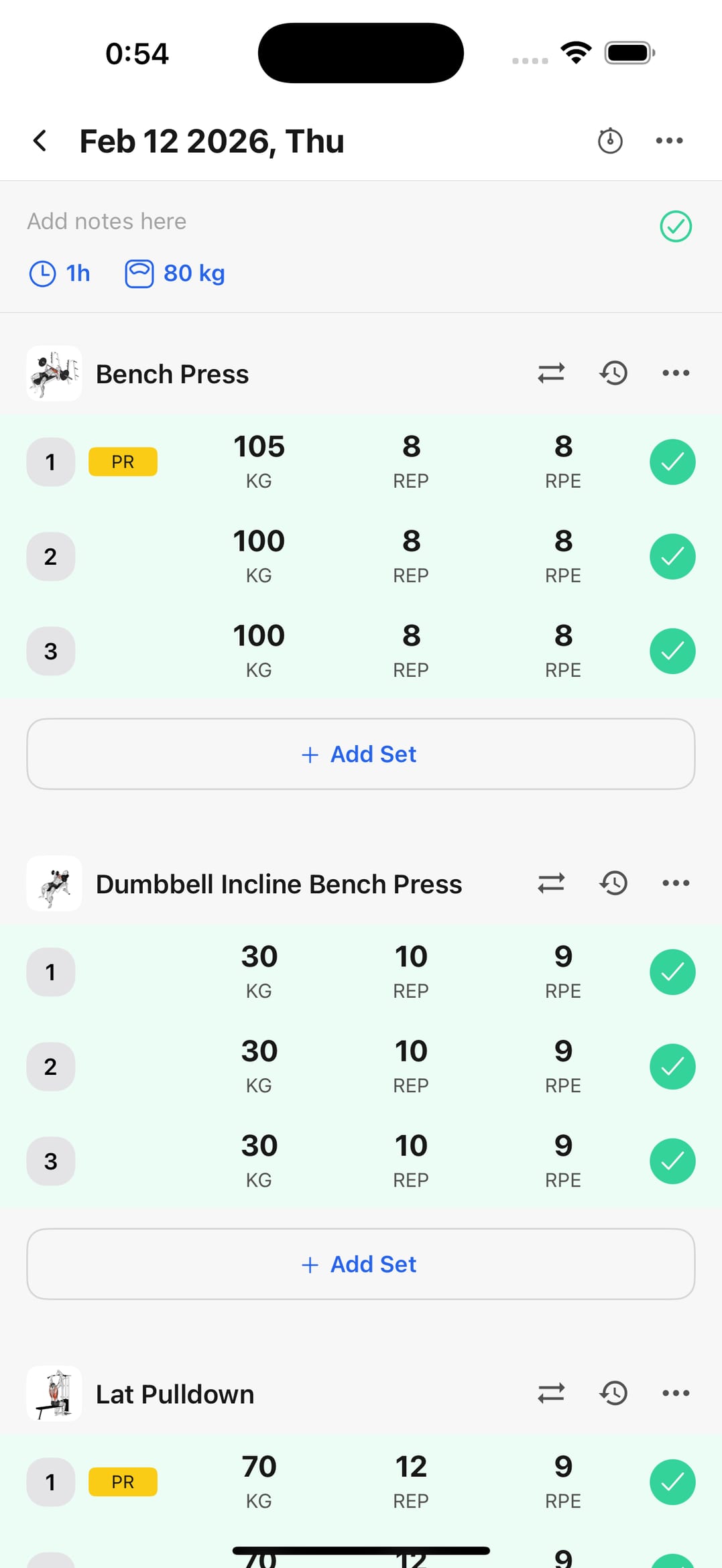
Log every block of work
At home, without loaded barbells, progress lives in reps and tempo. If you don't write those down, there's no way to know you've moved.
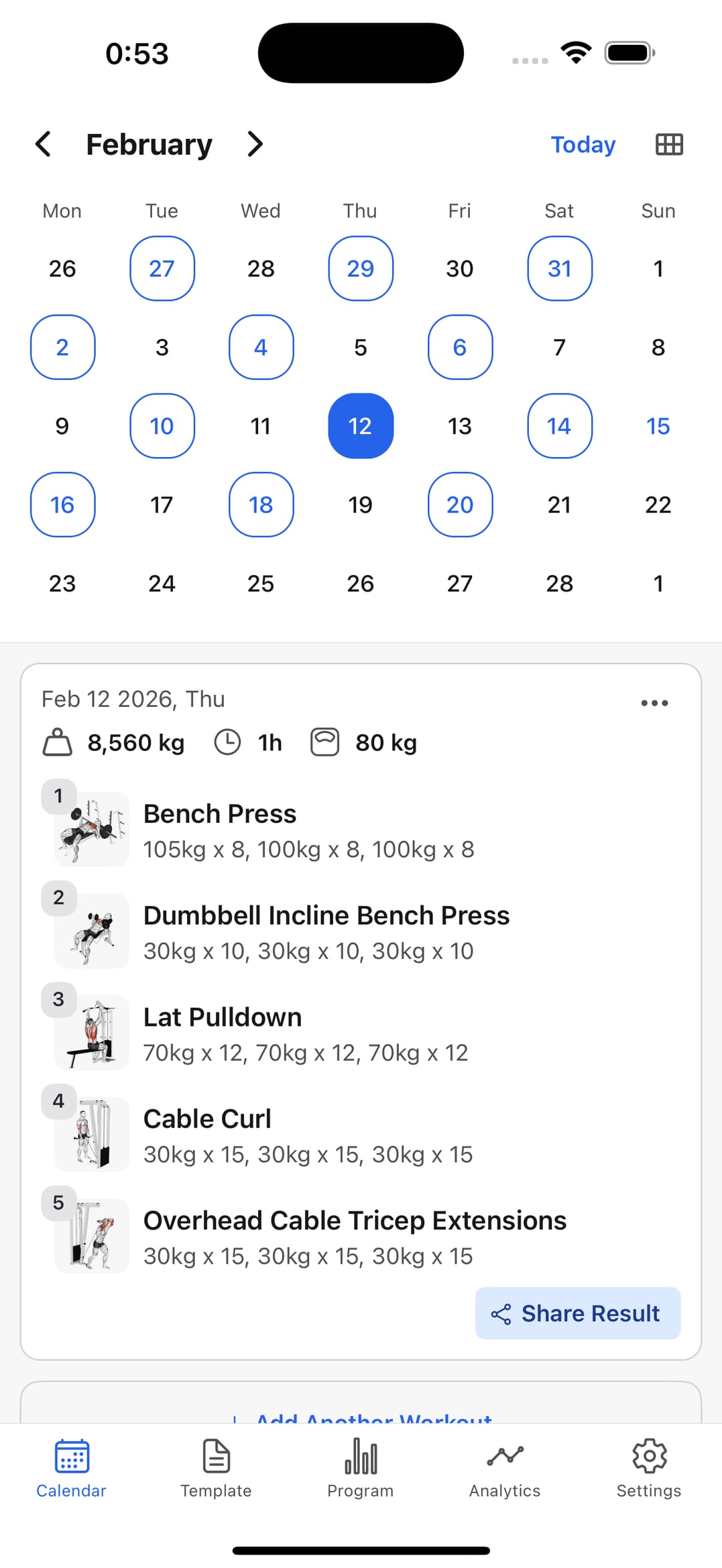
Check you're holding the weekly rhythm
Home training is easy to postpone because no commute commits you. The calendar shows quickly where the streak broke.
A simple structure for training at home
Execute, measure, and improve without a gym or more equipment.
Weekly structure
Fixed training days and session types for your home setup.
Adaptable library
Swap movements based on space, time, and equipment.
Templates by intensity
Versions for hard, moderate, and light days.
Per-exercise logging
Reps and load, even with minimal kit.
Useful analytics
Spot a stall before you lose motivation.
Frequently asked questions
Can a home workout plan actually be effective?
Yes, as long as you keep progressing. Without extra weight, that progression means more reps, more range of motion, less rest, or harder variations.
What do I do with no equipment at all?
Start with bodyweight movements and controlled tempo. Lowering over three seconds completely changes the difficulty of a push-up or a squat.
How many days a week should I train at home?
Three or four solid sessions beat a six-day plan you abandon in two weeks. Pick the frequency that survives a bad week.
How do I avoid stalling?
Raise difficulty one variable at a time: reps, range, tempo, or variation. Changing several at once leaves you unable to tell what worked.
Turn home training into a habit
Log every session and confirm you're progressing. Free to start, on iPhone and Android.