Gym workout plan
A plan works when you can repeat it and measure it. Here's how to order the exercises, how much volume to run, and when to touch the load.


Compounds first, isolation last
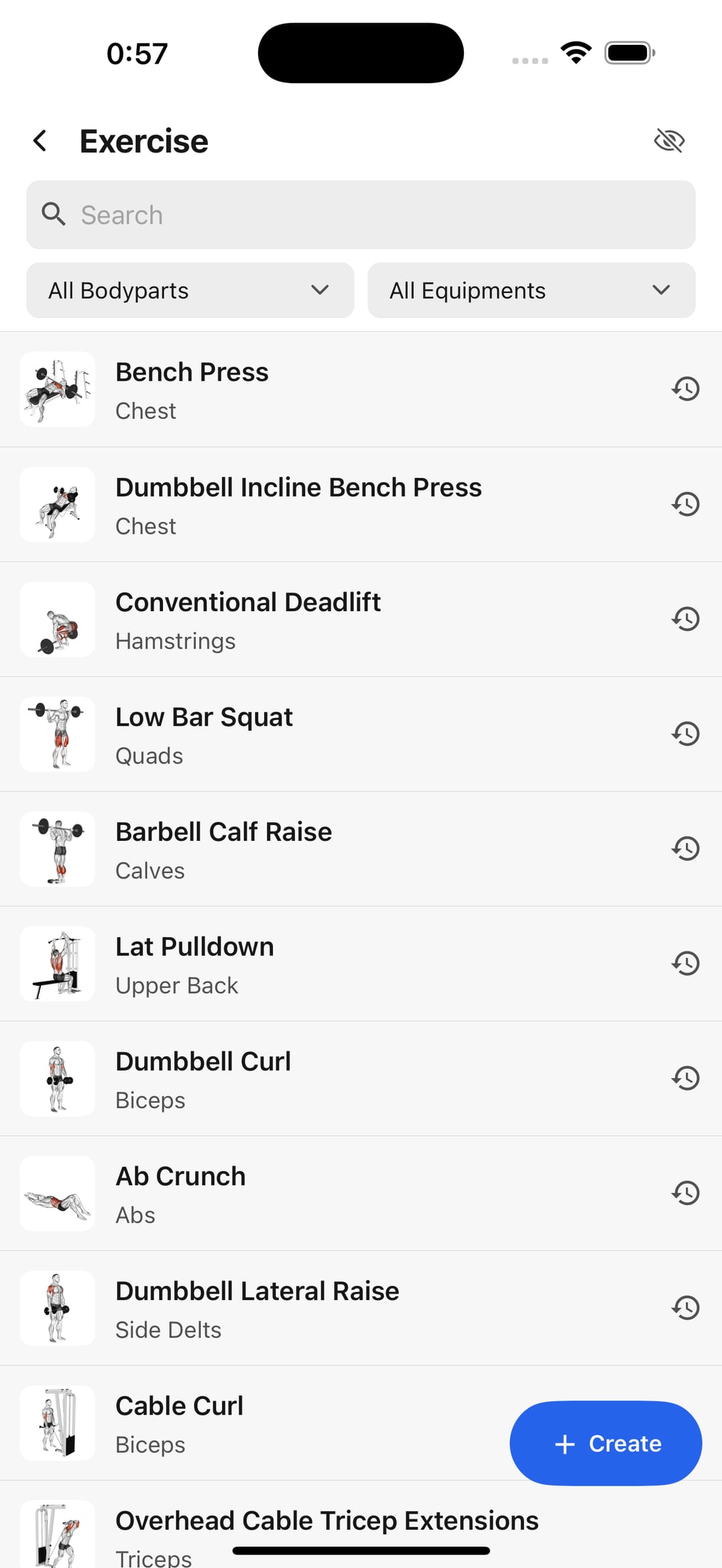
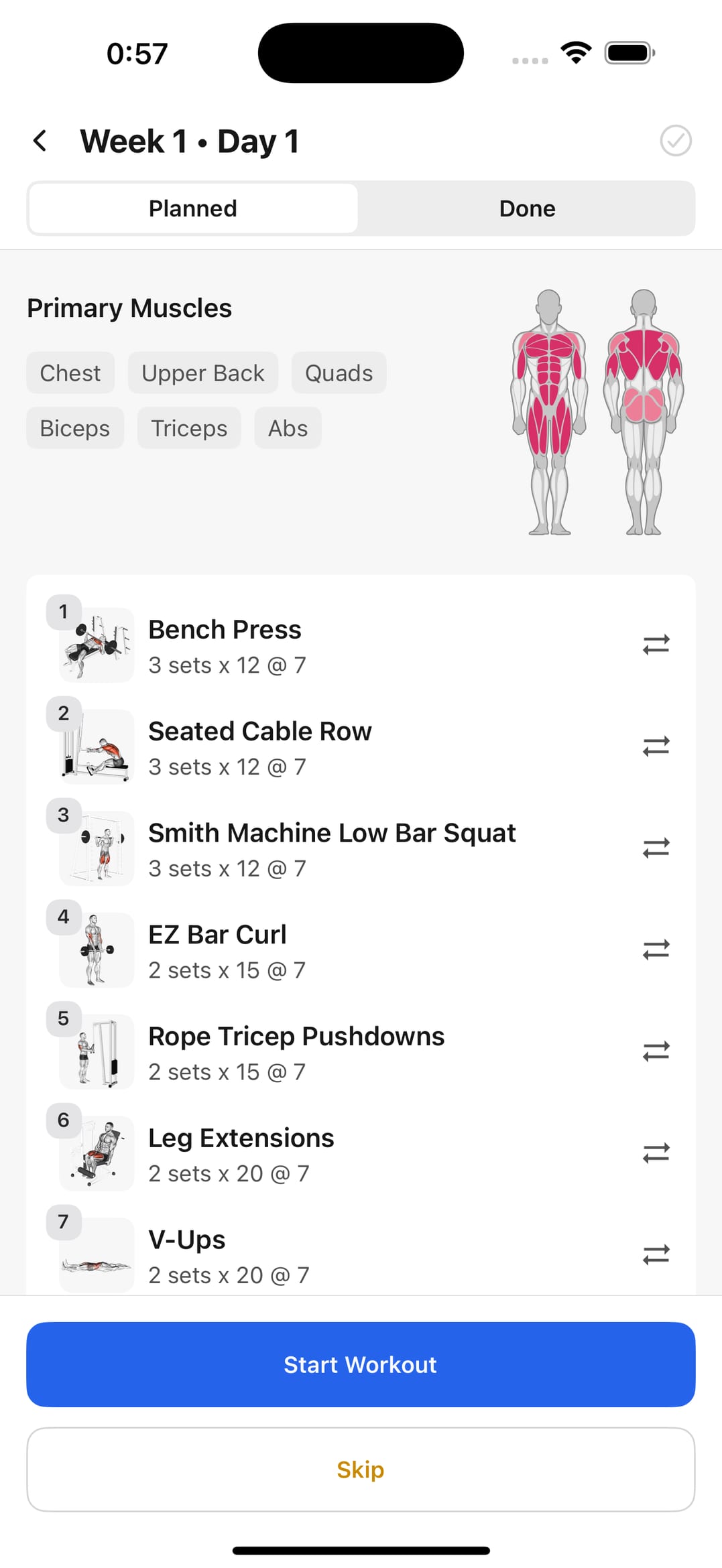
Squat, bench, and row while you're fresh. Accessory work fills out the volume at the end, where a few kilos either way matters much less.
Ten to twenty sets per muscle group per week
That range works for most people. Start at the bottom of it and only climb if you're recovering well between sessions.
Catch a stall before three months go by
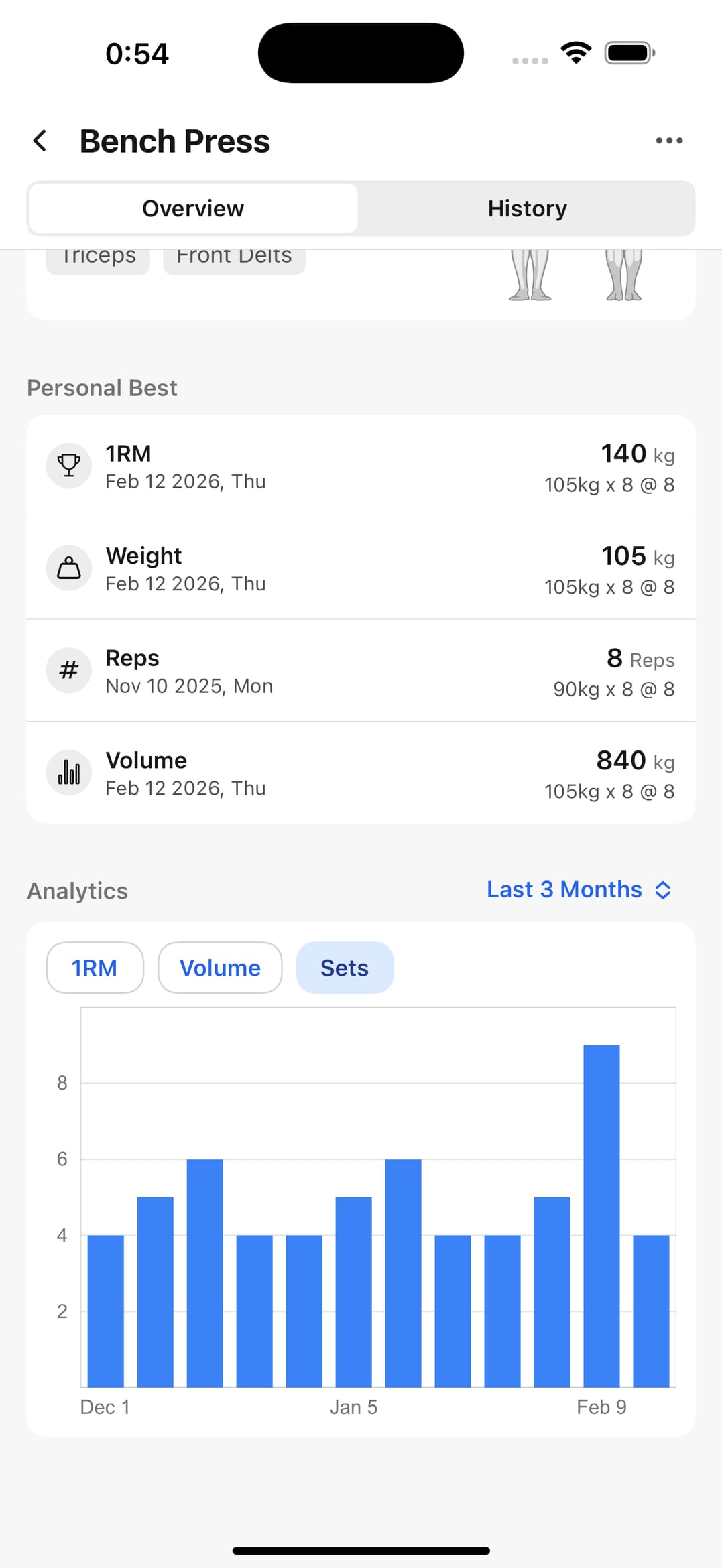
Per-exercise analytics show which movement has been flat for weeks. That's where you change volume or frequency — not across the whole plan.
What makes a gym plan hold up
Run the plan on the floor, and have something to review it against on Sunday.
Set logging
Each block saved without breaking the session's rhythm.
Substitute exercises
Alternatives ready for when a station is taken.
Proven weeks saved
Templates for push/pull/legs or full-body blocks.
Weekly history
The frequency you actually hit, not the one you planned.
Volume review
Check load jumps and frequency before the next block.
Frequently asked questions
How long should a gym session last?
Forty-five to seventy-five focused minutes. Much past that and set quality drops, so what you're adding is time in the building rather than useful stimulus.
How many sets per muscle group per week?
Ten to twenty works for most people. Start at the low end and only increase if you're recovering well between sessions.
Should I change exercises every week?
No. If you keep swapping movements you can't tell whether you're improving. Hold a stable base for several weeks and vary sets, reps, or load instead.
What do I do when the equipment is taken?
Keep one alternative ready per movement pattern and swap only that exercise. The rest of the session's order stays intact.
Make your gym plan measurable
Log every session and confirm from the data that you're progressing. Free to start.