Dumbbell workout plan
One pair of dumbbells and three sessions a week builds real strength. What matters is repeating the same structure and knowing how to progress when the weight runs out.


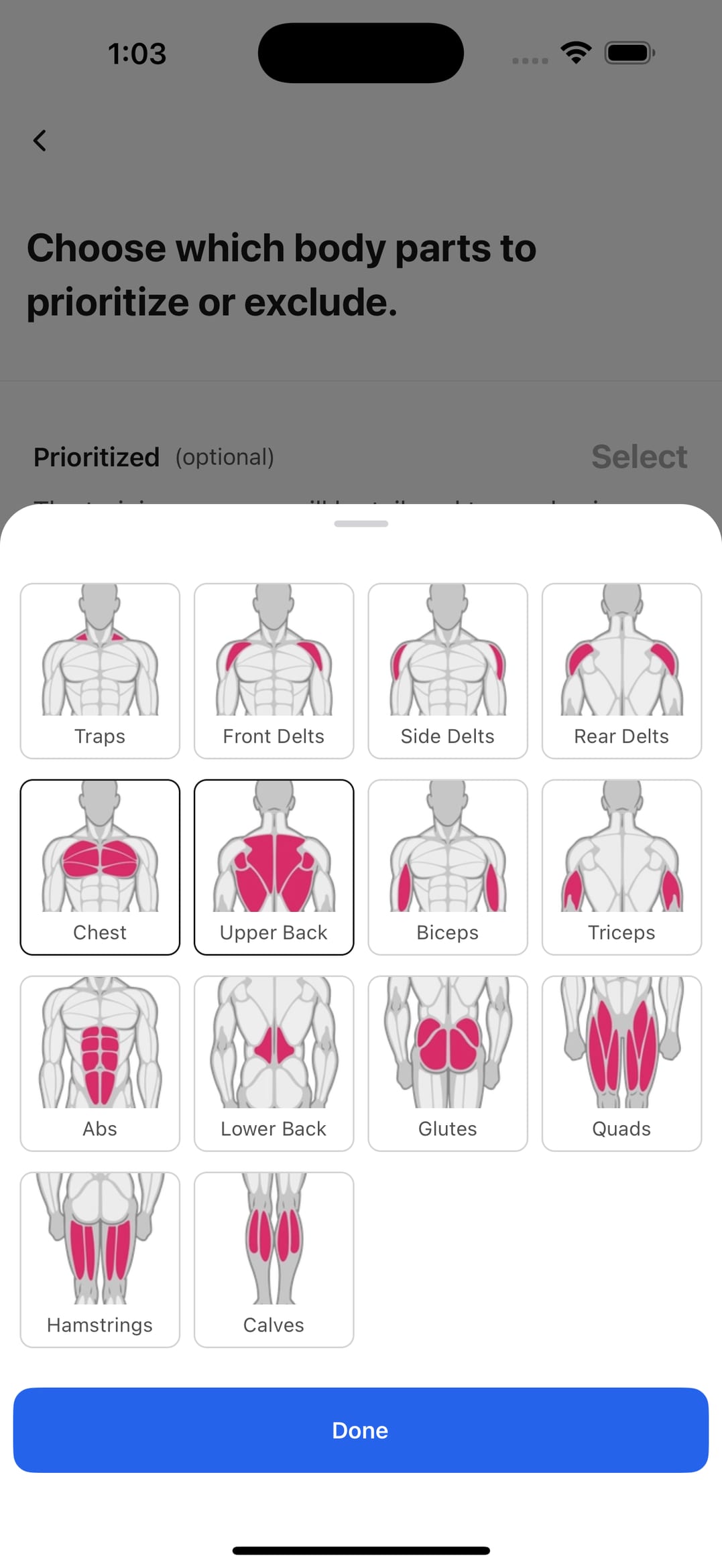
Push, pull, legs — in every session
Two or three days a week, go full body. At four, split upper and lower. The less equipment you have, the more it pays to repeat the basic patterns.
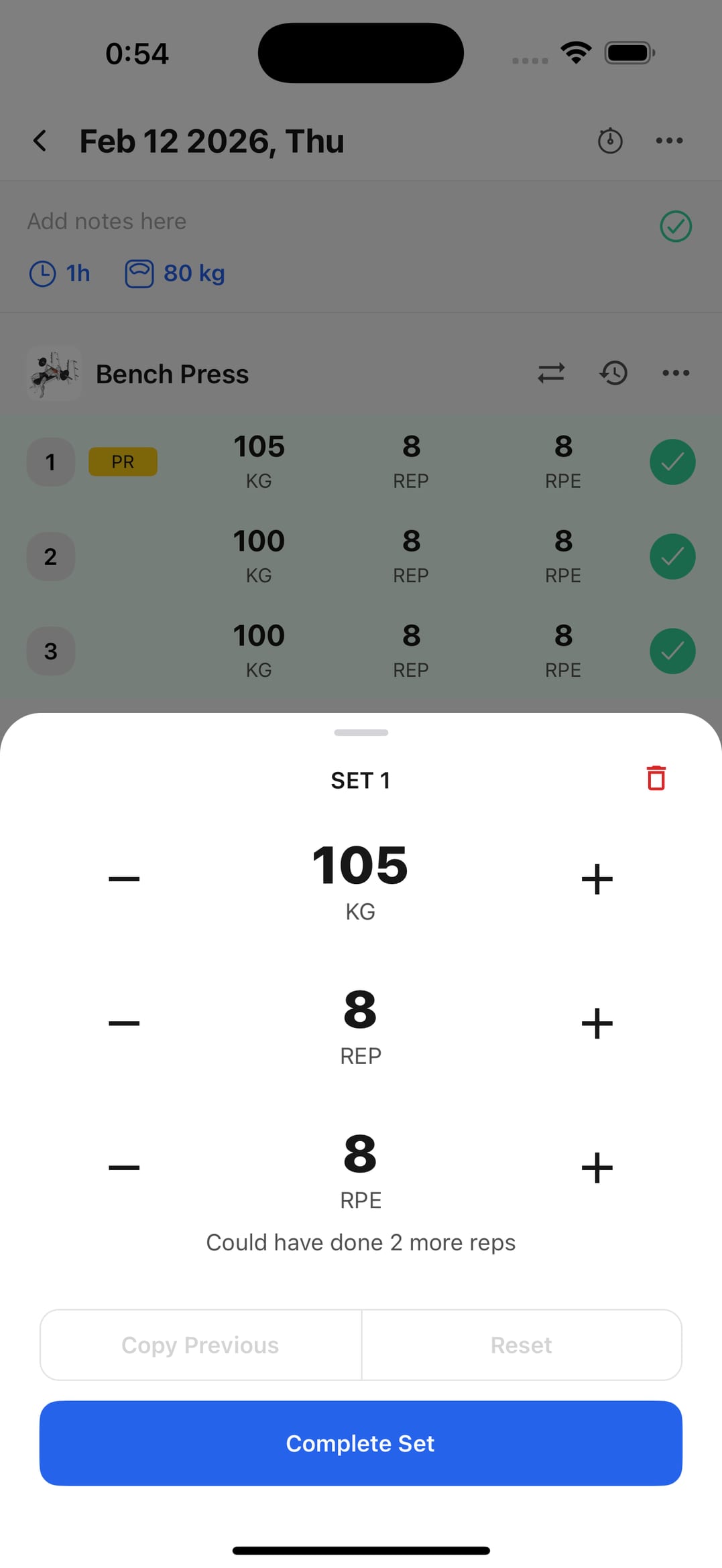
Write down the weight, even in your living room
Training at home doesn't mean training blind. Without a log you won't know whether 10 reps became 12 or you've been static for two months.
Make it harder before you make it heavier
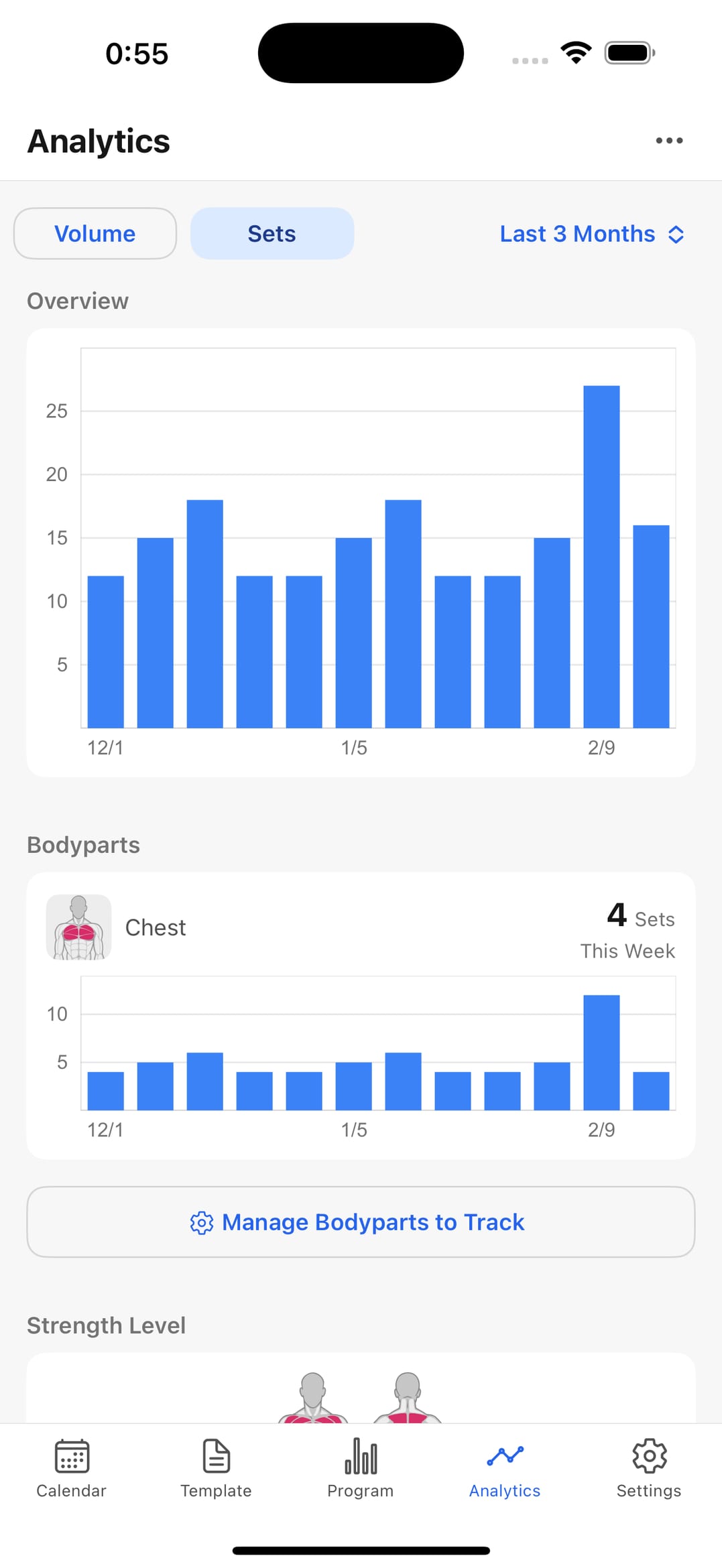
When the dumbbell gets light, your weekly trend tells you whether to add reps, slow the lowering, or move to a single-limb variation.
A plan that holds up with minimal kit
Simple, repeatable, measurable — that's what makes home training work.
Exercise variations
Alternatives ready for when the weight jumps are too big.
Build the week
Distribute push, pull, and leg patterns across your days.
Set-by-set logging
Weight and reps for each key movement.
Progress review
Decide whether to add load or repeat the week.
Reusable templates
Repeat the plan and apply small increments.
Frequently asked questions
Can you build real strength with dumbbells at home?
Yes, especially in the first year. With load progression, clean technique, and weekly consistency you'll gain strength and muscle without setting foot in a gym.
How many exercises per session?
Four to seven well-chosen ones. Beyond that the session drags and the quality of your last sets falls off without adding anything.
How do I progress without heavier dumbbells?
Add reps to the top of the range, slow the eccentric, shorten rest, or switch to single-arm and single-leg variations — those roughly double the relative load for free.
Does this plan work for a complete beginner?
Yes. Start with a weight that lets you finish the set with your form intact, and don't touch the load until the movement feels automatic.
Build your dumbbell plan and track it
Log each session and know when to step up. Free to start, on iPhone and Android.