
Workout tracker app for weight loss
Losing weight takes months, not weeks. A plan you actually complete — and a log that proves it — beats the perfect routine you abandon in March.


Build the routine that fits your real week
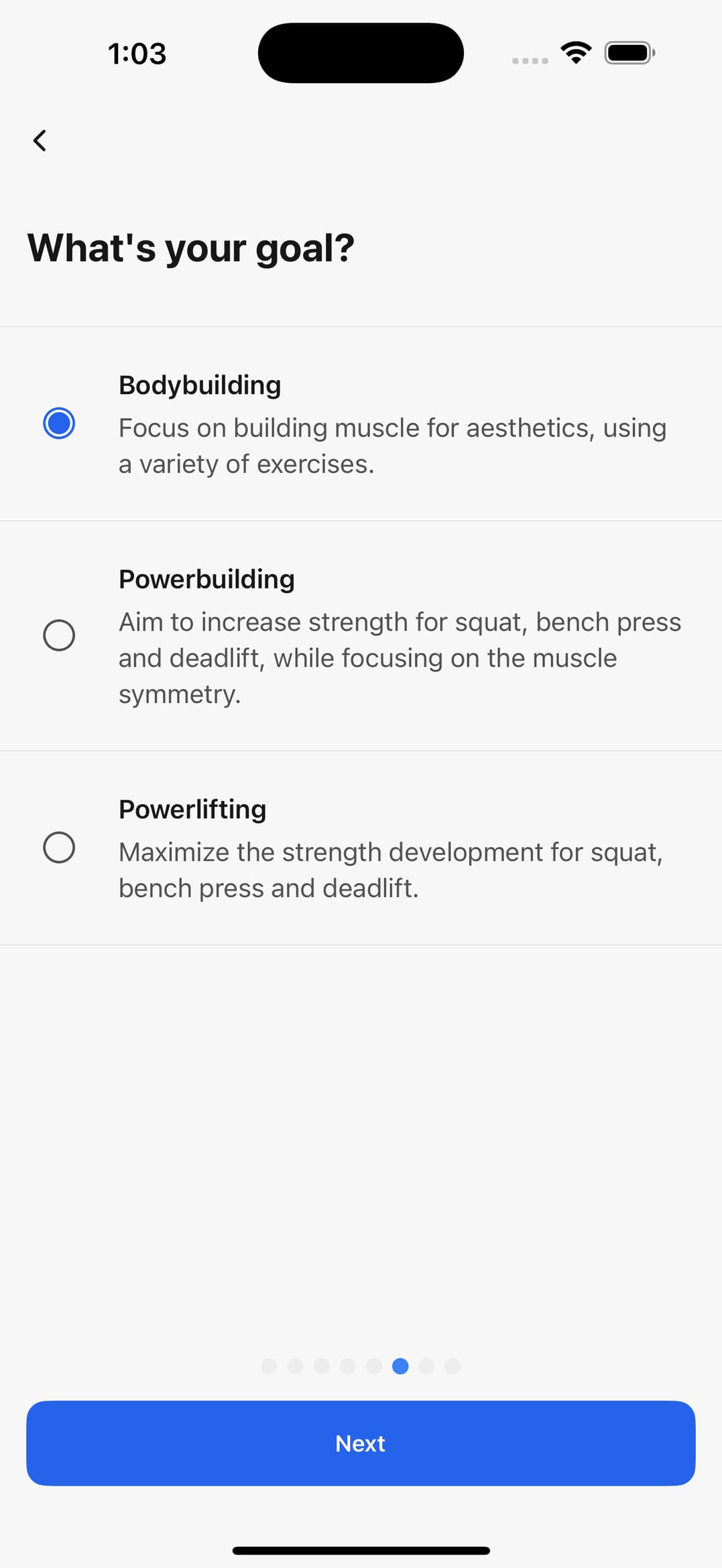
Three days you complete beat five you plan. Set the structure around the time you actually have, not the time you'd like to have.
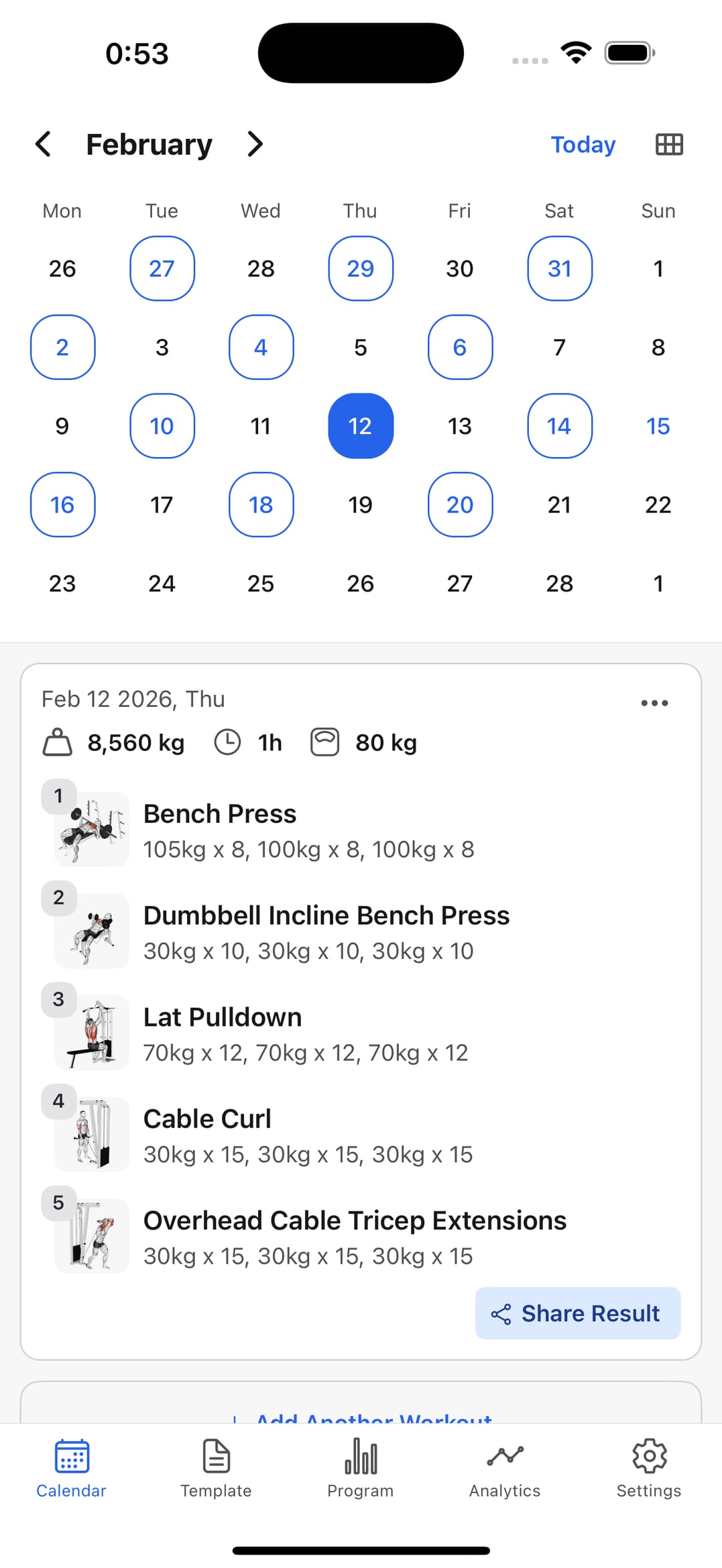
Log the session so you can't fool yourself
The feeling that "I barely trained this week" rarely matches what happened. History gives you the fact instead of the impression.
Keep your strength while the weight drops
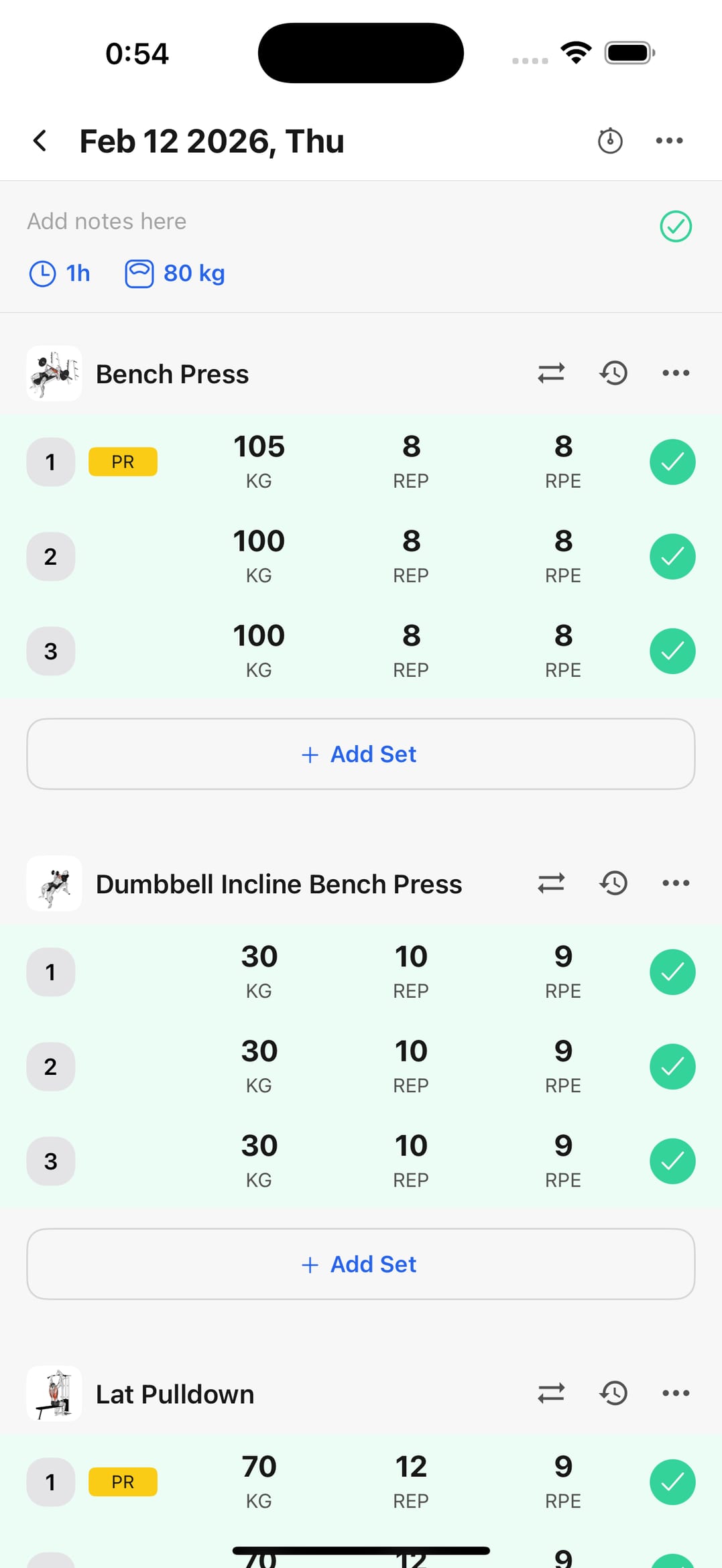
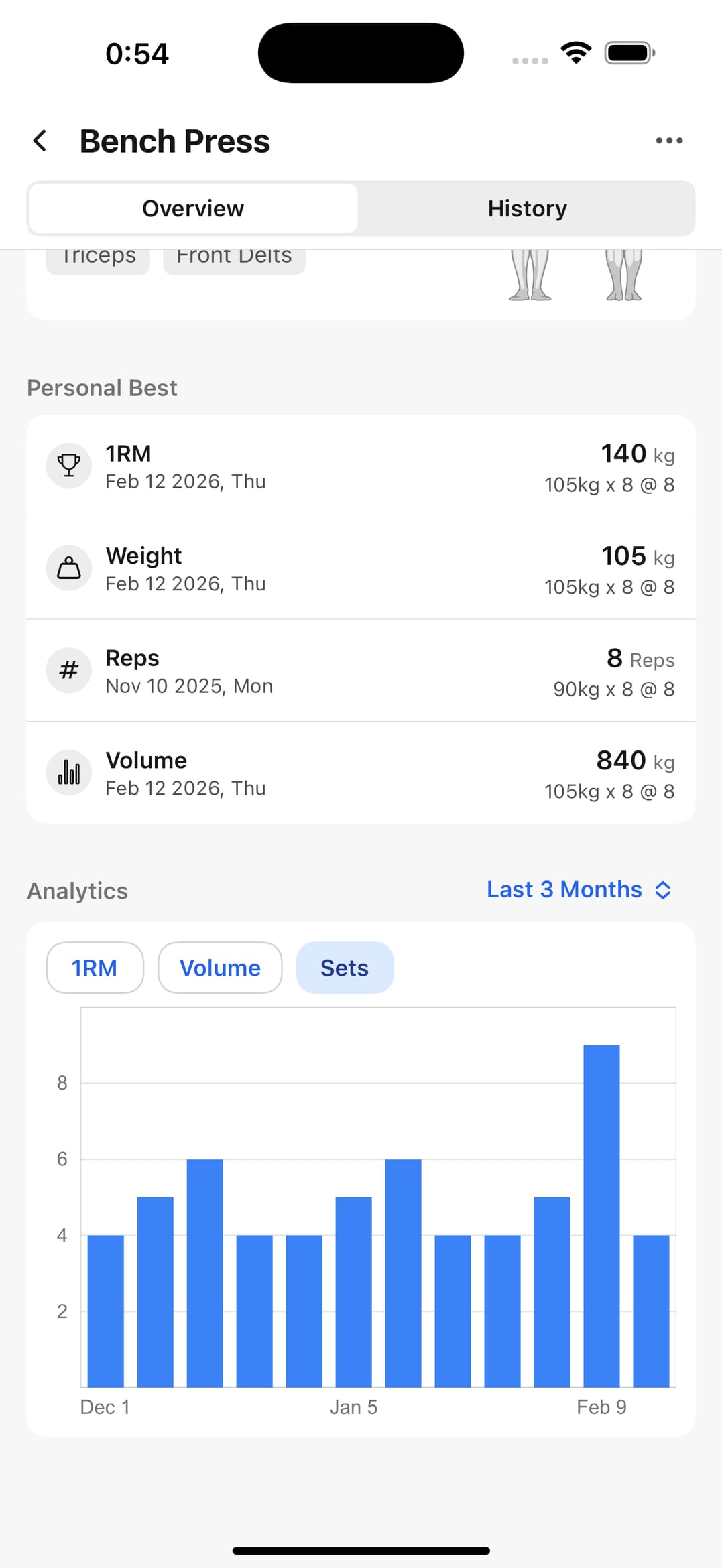
In a deficit, watching volume and loads warns you if you're losing muscle alongside fat. That's the signal to cut volume before intensity.
Training and measuring it, in one app
A simple structure for sustaining the plan through the months it takes.
Planned sessions
A weekly routine sized to the time you actually have.
Workout logs
Every session saved so you can compare against last month.
Consistency calendar
Adherence stays visible through the whole cut.
Progress analytics
Check whether performance holds as the weight comes down.
Template reuse
Repeat what works without setting it up again.
Frequently asked questions
Does a workout app actually help with weight loss?
It helps with the part people fail at: consistency. A calorie deficit drives the weight loss, but training consistently is what makes you lose fat rather than muscle.
Do I need to train every day?
No. Three or four strength sessions a week, sustained over months, beat training daily for two weeks and stopping.
Should I still track lifts while in a deficit?
Especially then. Your loads are the early warning: if they start dropping across several sessions, cut training volume before you cut intensity.
Does this replace nutrition tracking?
No. It complements it. WorkoutWise keeps workout consistency, load, and progression visible; what you eat is what determines the deficit.
Start now and still be training in March
Download the app, set your plan, and have history from week one. Free to start.