
Workout plan
A plan isn't a list of exercises — it's a structure you repeat and adjust. Here's how to build one and how to tell whether it's working.


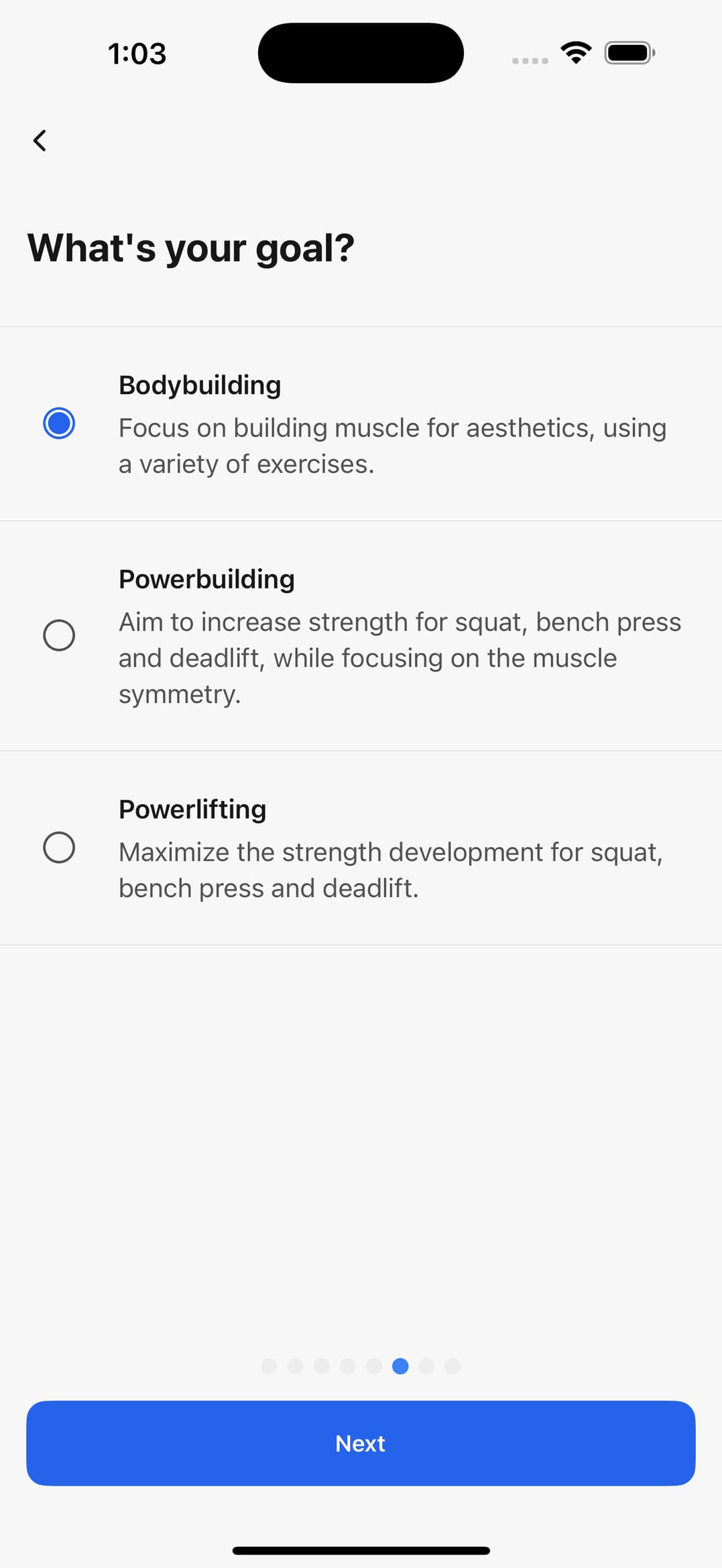
Pick a structure and stay with it
Upper/lower, push-pull-legs, or full body — they all work. What doesn't work is changing every three weeks and having nothing left to compare.
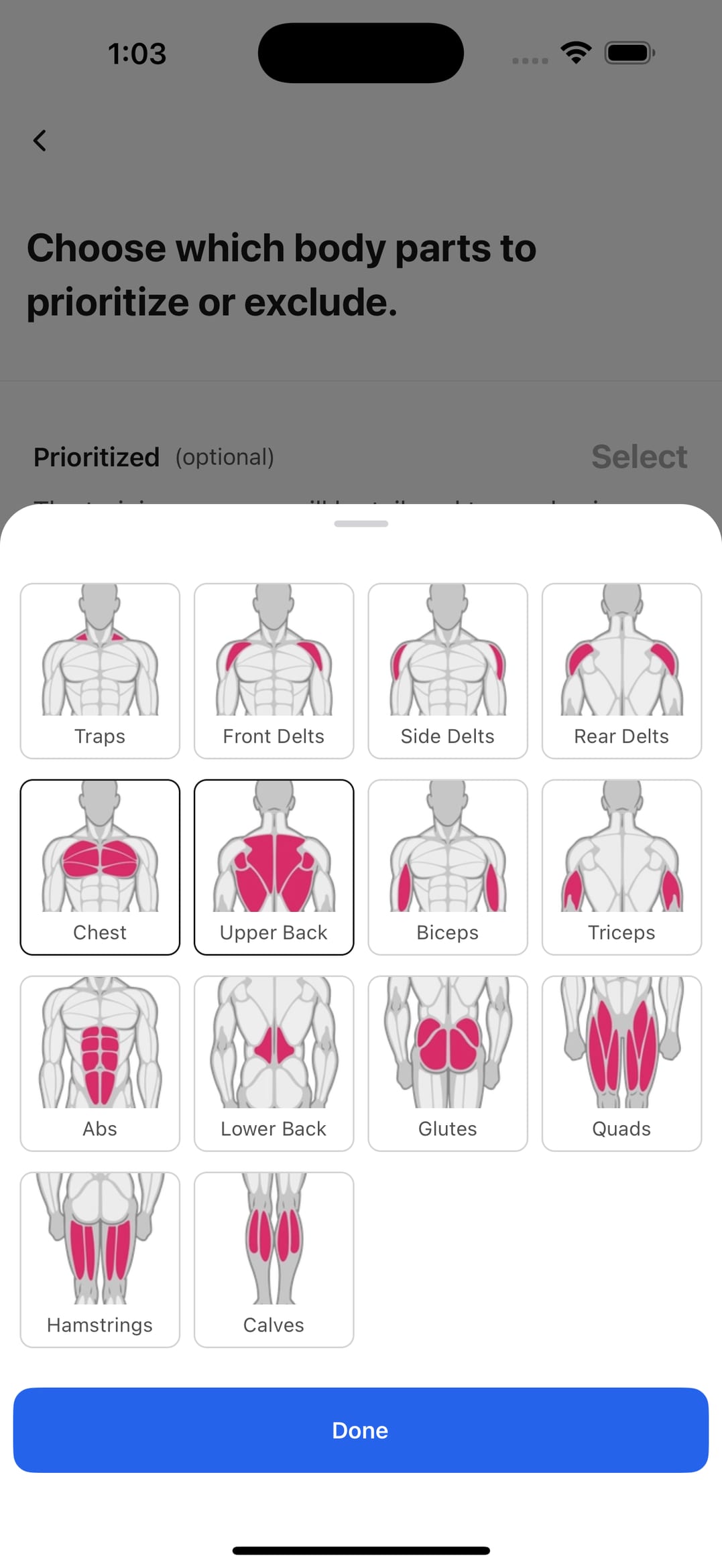
Hit each muscle group twice a week
Frequency matters more than which template you picked. Two exposures per group per week is the pattern most plans that work have in common.
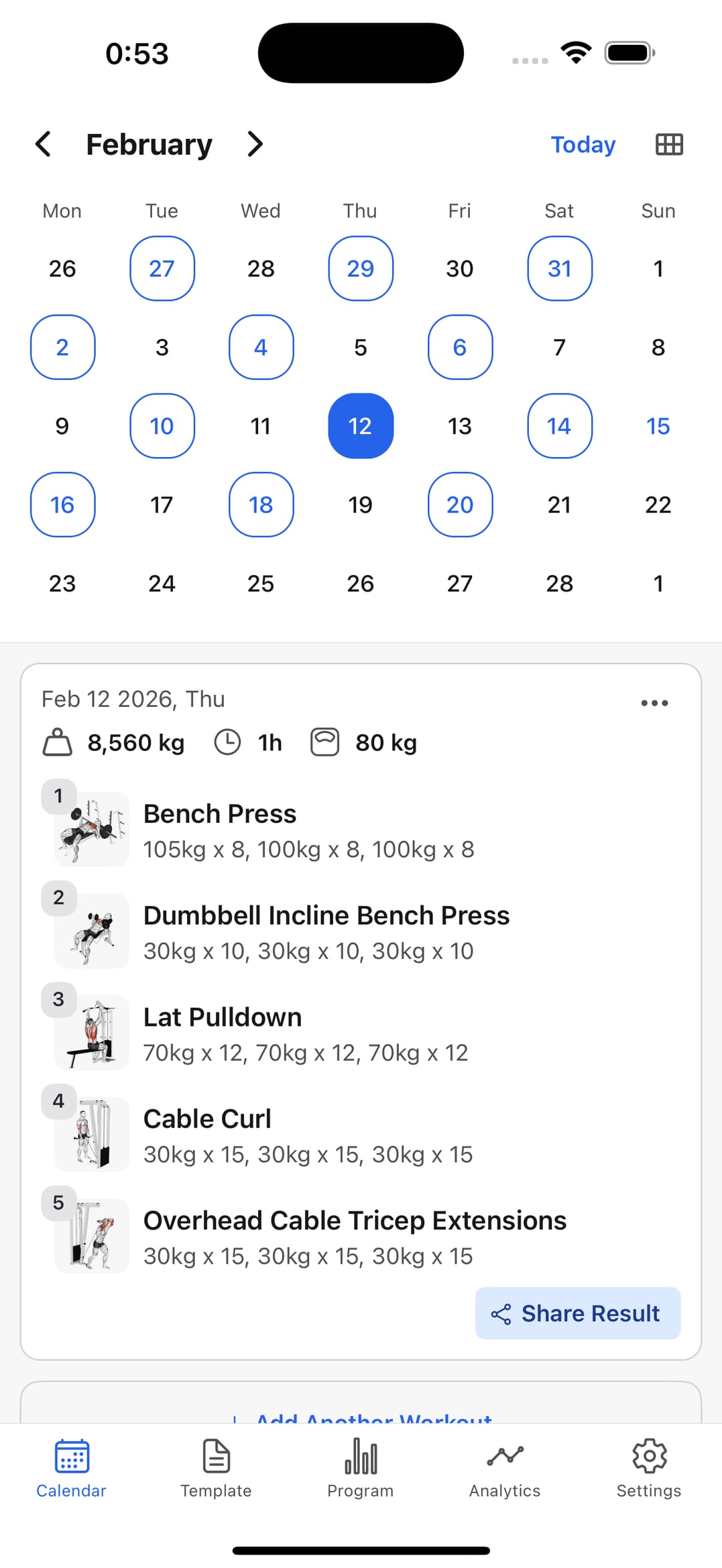
Check the frequency you actually hit
Almost everyone trains fewer days than they believe. The calendar gives you the real number, and that's what to plan against.
What a plan that lasts is made of
Plan, execute, and adjust with numbers instead of instinct.
Build the block
Set the split, priorities, and set volume realistically.
Order by priority
Compounds and accessory work arranged around your focus.
Reuse what works
Save a productive week as a template for the next block.
Weekly rhythm
Compare your plan against the sessions you completed.
Load progression
Review volume and progress before you change anything.
Frequently asked questions
How many days a week should a workout plan have?
Three or four is where most people progress and still sustain the plan. Move to five only when recovery is keeping up and form holds through the week.
How do I split the muscle groups?
Pick something simple — upper/lower or push-pull-legs — and keep it for several weeks. What matters is that each group gets trained at least twice a week.
When should I change the plan?
When load, reps, and execution quality have all been flat for several weeks. Boredom isn't enough: changing too early erases your basis for comparison.
Does this apply if I'm a beginner?
Yes. The structure is the same, the volume is lower. Fewer sets, a handful of compound movements, and small increases.
Turn your plan into a system
Build the structure, log every session, and adjust with data. Free to start.