
Beginner workout plan
A handful of movements, done well, repeated every week. That builds more strength in year one than any clever split does.


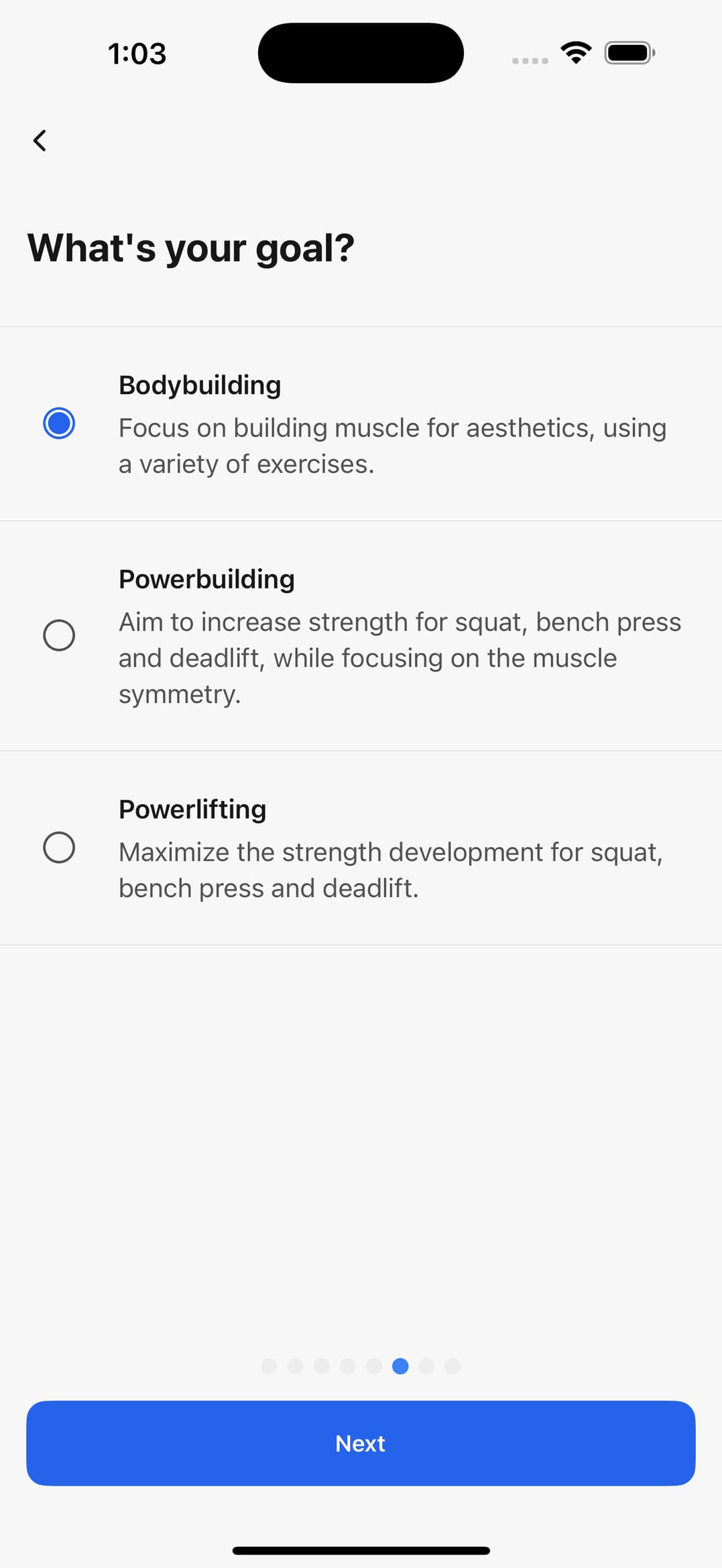
Start with fewer sets than you think
Two to four sets per muscle group is plenty at the start. Putting form ahead of load avoids the injury that ends most people's streak in month two.
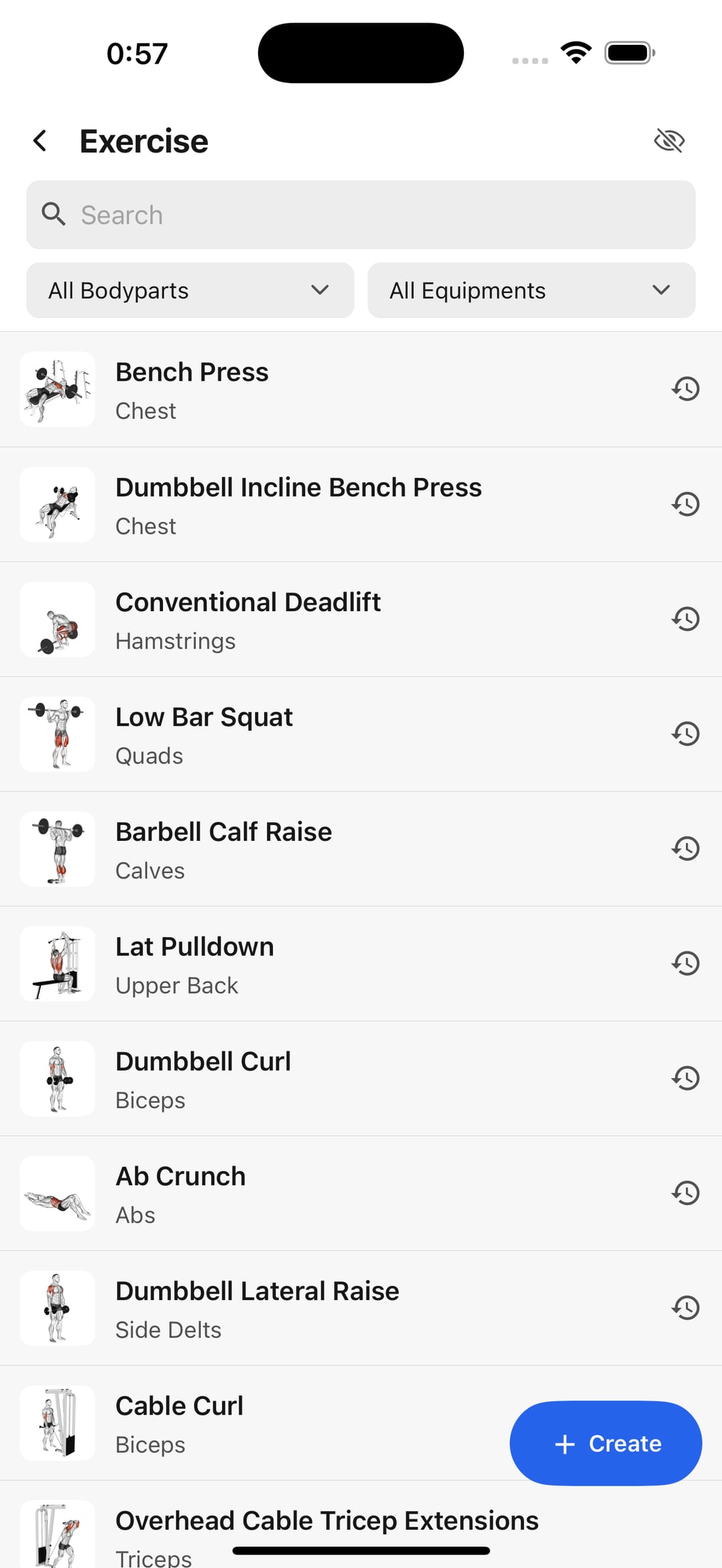
Six to eight movements is the whole plan
Squat, hinge, push, pull, carry. Repeating them is what lets you measure progress; swapping exercises every week makes that impossible.
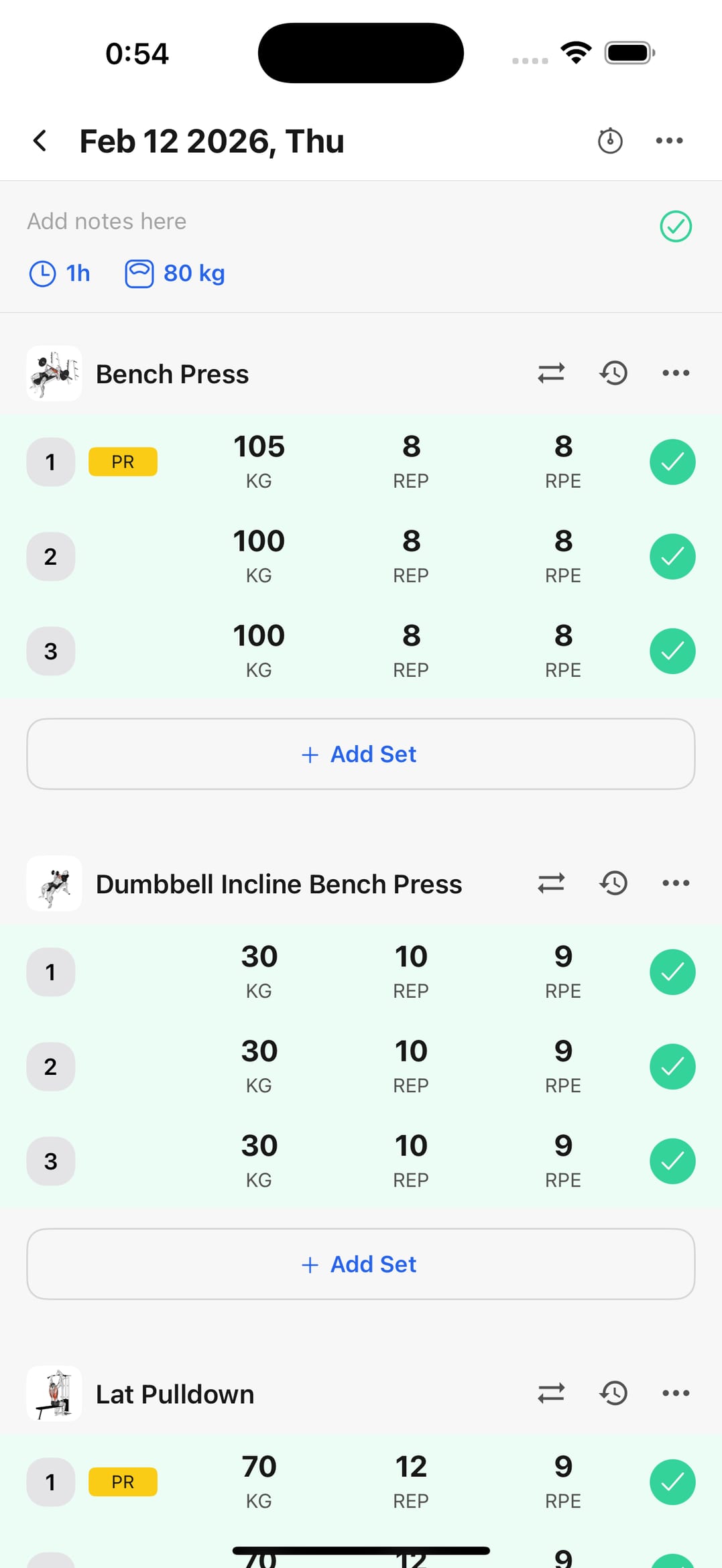
Write the weight down so you know when to add
Without a log you can't tell whether you're progressing. With one, adding weight stops being a guess and becomes a decision you can see coming.
The basics for starting well
A simple frame for learning the lifts, repeating them, and adding load safely.
Plan templates
Start from a structure matched to three or four days a week.
Session repeats
Run the same session until the movement feels automatic.
Workout logs
Track every set so progressive overload has evidence behind it.
History view
See whether you're holding the frequency you set.
Progress checks
Confirm the climb is gradual rather than a series of jumps.
Frequently asked questions
How many days a week should a beginner train?
Three is a solid base: enough recovery between sessions and a frequency that survives a busy week. Four works once the habit is established.
How many exercises should I start with?
Six to eight covering the main movement patterns. That's enough for the whole first year — repeating them is exactly what makes progress measurable.
Should I train to failure on every set?
Not at first. Leave one or two reps in reserve: your form stays clean, you recover better between sessions, and you learn the movement faster.
When do I add weight?
When you hit the top of your rep range with good form two or three sessions in a row. If you log your sets, that moment is visible in your history.
Start a beginner plan you can actually keep
Build the plan, log every session, and know when to add weight. Free to start.